A heavy-duty roof rack is essential for securely mounting an overland tent (RTT) and additional gear on your vehicle, providing the necessary stability and durability for challenging terrain. Unlike standard roof racks, heavy-duty systems are specifically engineered to handle the substantial static weight of a tent with occupants and the dynamic forces encountered while driving. This ensures safety, prevents damage to your vehicle and tent, and expands your carrying capacity for overlanding adventures.
Why You Need a Heavy-Duty Roof Rack for Overland Tents
The allure of an overland tent is undeniable, transforming your vehicle into a cozy, elevated sanctuary. But to safely and effectively utilize an RTT, a standard roof rack simply won’t suffice. Heavy-duty roof racks are engineered specifically to handle the substantial weight and dynamic forces associated with carrying a rooftop tent and additional gear, providing stability, durability, and peace of mind on challenging terrain.
Increased Gear Capacity
Beyond just the tent, overlanding often requires carrying recovery gear, fuel, water, and other accessories. Heavy-duty racks offer expanded real estate and numerous attachment points, allowing you to organize and secure all your essentials without compromising interior space.
Foundation for Overland Tents
Your roof rack serves as the critical link between your vehicle and your overland tent. It must be able to distribute the static weight of the tent, its occupants, and contents when parked, as well as the dynamic forces encountered while driving. A dedicated heavy-duty system is designed to bear these loads, minimizing flex and potential damage to both your vehicle and your tent.
Safety and Durability
Choosing an inadequate or poorly installed roof rack is not just inconvenient; it can be a serious safety hazard. A robust rack ensures that your tent remains firmly attached, preventing dangerous shifts or failures, especially during off-road travel. Quality materials and construction translate to long-term reliability, standing up to harsh weather and demanding trails year after year.
Types of Heavy-Duty Roof Racks
The market offers several types of heavy-duty roof racks, each with distinct advantages for overlanding. Understanding these options is key to finding the perfect fit for your vehicle and adventure style.
Full Platform Roof Racks
These are arguably the most popular choice for serious overlanders. Full platform racks provide a flat, expansive surface that maximizes usable space on your vehicle’s roof. They often feature integrated T-slots along all sides, offering endless possibilities for mounting accessories like awnings, light bars, recovery boards, and even solar panels. Their robust design typically distributes weight exceptionally well.
Heavy-Duty Crossbar Systems
|
Our Picks for the Best Roof Rack in 2026
As an Amazon Associate I earn from qualifying purchases.
|
||
| Num | Product | Action |
|---|---|---|
| 1 | MeeFar Roof Rack Carrier Basket Universal Rooftop 51" X 36" X 5" + Waterproof Bag 15 Cubic Feet (44" 34" 17"), and Cargo Net with Attachment Hooks, Ratchet Straps |

|
| 2 | MaxxHaul Steel Roof Rack Cargo Basket, 46" x 36" x 4.5" Roof Top Carrier, Universal Fit for Cars, SUVs, Vans, and RVs, 150 lb Capacity, Weather-Resistant Easy-Install Cargo Storage (70115) |
|
| 3 | MAXXHAUL 50506 64" x 39" x 6" Heavy-Duty Universal Steel Roof Rack , Black |
|
| 4 | 64 x 39 x 6 Inch Roof Rack Basket, Heavy Duty 300LB Car Roof Rack Universal Cargo Carrier Rooftop Cargo Basket Steel Luggage Holder for SUV, Truck & Pickup |
|
| 5 | Auto Dynasty Roof Rack Cross Bars Compatible with 2014-2018 Acura MDX, 165lbs Rooftop Cargo Bars Aluminum Anti-Corrosion Bolt-On Roof Rails for Luggage Bike Kayak Racks |
|
| 6 | KitsPro 260lb Roof Rack Cross Bars for 2011-2021 Jeep Grand Cherokee (ONLY FIT Factory Grooved Side Rails), Matte Black Heavy Duty Aluminum Cargo Crossbar |
|
| 7 | munirater Universal 43.3 inch Black Roof Rack Cross Bar Top Luggage Aluminum Carrier Adjustable Window Frame 2Pcs |
|
| 8 | GarveeLife 51 in x 36 in Universal Roof Rack Carrier Basket, 200 LBS Capacity Rooftop Cargo Rack, Car Top Luggage Holder Basket Heavy Duty for SUVs, Trucks, Vehicles |
|
| 9 | GarveeLife 46" x 36" Universal Roof Rack Cargo Carrier Basket, 200 Lbs Capacity Rooftop Cargo Rack, Car Top Luggage Holder Basket Heavy Duty for SUVs, Trucks, Vehicles |
|
| 10 | GarveeLife 51 in x 36 in Universal Roof Rack Basket, 200 LBS Capacity Rooftop Cargo Carrier Basket, Heavy Duty Luggage Holder Rack for SUVs, Trucks, Vehicles |
|
For those seeking a more minimalist or budget-friendly approach, heavy-duty crossbar systems offer a strong foundation. Consisting of two or more robust bars that span the width of your vehicle, these are excellent for mounting rooftop tents and can still accommodate a variety of accessories. They are generally easier to install and remove compared to full platforms.
Integrated/Vehicle-Specific Systems
Some vehicles benefit from integrated or vehicle-specific roof rack systems that are custom-designed to fit existing factory mounting points or complement the vehicle’s body lines. These often offer a clean aesthetic and optimal weight distribution, as they are engineered in conjunction with the vehicle manufacturer’s specifications.
Truck Bed Racks
Specifically for pickup trucks, bed racks elevate the overland tent above the truck bed, freeing up valuable cargo space below. These come in various heights, from low-profile options that sit just above the cab to taller designs that allow for additional storage underneath the tent. Some innovative designs even extend over the cab, merging the utility of a bed rack with additional roof-level capacity.
Comparison Table: Types of Heavy-Duty Roof Racks
| Type of Roof Rack | Advantages | Disadvantages | Typical Dynamic Load Rating |
|---|---|---|---|
| Full Platform | Maximum usable space, versatile accessory mounting, even weight distribution | Higher initial cost, can add significant height and weight, complex installation | 75 kg – 150 kg (varies by model and vehicle) |
| Heavy-Duty Crossbars | More affordable, easier installation, lower profile, lighter weight | Limited mounting points, less surface area for gear, potentially less rigid | 75 kg – 100 kg (varies by model and vehicle) |
| Truck Bed Racks | Frees up truck bed space, lower center of gravity for RTT (compared to roof), robust | Specific to pickup trucks, can limit rear visibility | 150 kg – 250 kg (varies by model and truck) |
How to Choose the Right Heavy-Duty Roof Rack
Selecting the perfect heavy-duty roof rack for your overland tent involves careful consideration of several factors. The right choice ensures not only safety but also enhances the overall functionality and enjoyment of your adventures.
Assess Your Overlanding Needs
Begin by envisioning your typical overlanding setup. What size and weight is your overland tent? Do you plan to carry other heavy items like spare tires, fuel cans, or recovery gear on the roof? Understanding the total weight and bulk of your intended load will guide you toward racks with appropriate load capacities and dimensions.
Vehicle Compatibility and Load Ratings
This is arguably the most critical step. Consult your vehicle’s owner’s manual for its maximum roof load limits. Remember that a roof rack has two crucial ratings:
- Dynamic Load Rating: This is the maximum weight the rack can safely support while the vehicle is in motion. This rating accounts for forces like acceleration, braking, cornering, and bumps. For overlanding with RTTs, a dynamic rating of at least 75-100 kg is often recommended, but always default to the lowest rating between your vehicle, rack, and tent.
- Static Load Rating: This is the maximum weight the rack can support when the vehicle is stationary. This is crucial for rooftop tents, as it includes the combined weight of the tent, bedding, and all occupants when parked. Static ratings are typically three to five times higher than dynamic ratings.
“Always consult your vehicle’s owner’s manual for its official roof load limits before installing any roof rack or rooftop tent. Disregarding these specifications can lead to severe safety hazards and vehicle damage.”
Material and Construction Quality
Heavy-duty roof racks are commonly made from aluminum or steel. Aluminum racks are lightweight, corrosion-resistant, and ideal for reducing overall vehicle weight. Steel racks, while heavier, offer maximum durability and strength, often preferred for extreme expedition setups. Look for powder-coated finishes to prevent rust and enhance longevity.
Mounting Options and Accessories
Consider how the rack mounts to your vehicle. Some racks attach to factory rails, while others require drilling into the roof. A system that uses existing factory mounting points can simplify installation and preserve your vehicle’s resale value. Also, think about the accessories you might want to integrate. Many heavy-duty racks feature T-slot channels or a modular design that allows for easy attachment of lights, awnings, shovels, and other essential gear.
Top-Rated Heavy-Duty Roof Rack Brands
Several brands have established themselves as leaders in the heavy-duty roof rack market, known for their innovative designs, quality construction, and reliability.
- Front Runner Outfitters: Hailing from South Africa, Front Runner is renowned for its Slimline II platform racks. These modular, lightweight aluminum racks are highly versatile, offering extensive accessory compatibility and a low-profile design.
- Rhino-Rack: An Australian powerhouse, Rhino-Rack offers a wide range of solutions, including their popular Pioneer Platform. Made from reinforced aluminum, these platforms are durable, non-corrosive, and designed for heavy loads and challenging conditions.
- Yakima: A well-known American brand, Yakima provides robust crossbar systems like the TrimHD bars and their LockNLoad platform series, catering to a variety of vehicles and load requirements with a focus on ease of use and accessory integration.
- Prinsu: Specializing in vehicle-specific platform racks, Prinsu offers sleek, low-profile designs that often sit closer to the roof, reducing wind noise and improving aerodynamics. Their racks are known for their strong aluminum construction and modularity.
- ARB: Another Australian giant, ARB offers durable flat aluminum roof racks and heavy-duty touring racks, engineered for extreme off-road conditions and supporting substantial static loads, making them ideal for larger rooftop tents.
- GOBI Racks: Known for their fully welded construction and unique aesthetic, GOBI Racks offer expedition-grade strength and a plethora of attachment points, often designed to maximize rooftop utility while maintaining a sleek profile.
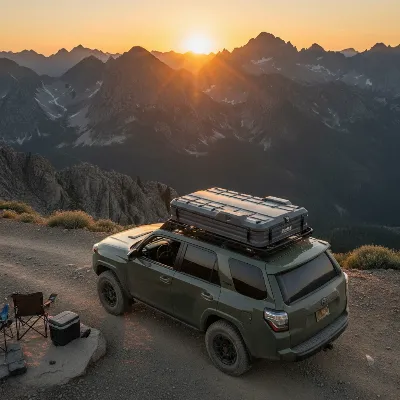 A rugged 4×4 vehicle with a heavy-duty roof rack supporting a large overland tent, parked in a scenic mountain landscape during sunset.
General Installation Guide for Heavy-Duty Roof Racks
While specific installation steps vary greatly by rack brand and vehicle model, a general understanding of the process can prepare you for setting up your heavy-duty roof rack. Always refer to your manufacturer’s detailed instructions, as incorrect installation can compromise safety.
Prepare Tools and Workspace
Gather all necessary tools, which typically include wrenches, tape measures, and possibly a torque wrench. Ensure you have a clear, level workspace and recruit a helper if the rack components are heavy or bulky.
Read Manufacturer Instructions Thoroughly
Each roof rack system has unique mounting points and assembly requirements. Read the entire instruction manual before beginning. Pay close attention to torque specifications for bolts and any vehicle-specific guidance.
Assemble and Mount Components
Typically, you’ll assemble the main crossbars or platform sections first. Then, attach the mounting feet or towers to these sections. Carefully place the assembled rack onto your vehicle’s roof, aligning it with the designated factory mounting points or rain gutters.
Secure and Test
Once positioned, begin securing the rack to the vehicle, tightening bolts in the sequence recommended by the manufacturer. Use a torque wrench to ensure all fasteners are tightened to the correct specifications, as under or over-tightening can lead to issues. After installation, gently shake the rack to confirm it is rigidly mounted. Perform a short test drive to listen for any unusual noises or vibrations.
Important Considerations When Using a Heavy-Duty Roof Rack
Once your heavy-duty roof rack and overland tent are installed, mindful usage is crucial for safety, performance, and longevity.
Do Not Exceed Load Limits
Never exceed your vehicle’s or your roof rack’s dynamic and static load ratings. This includes the combined weight of the rack itself, the tent, and any additional gear. Overloading can severely affect vehicle handling, braking, and stability, leading to dangerous situations or structural damage.
Distribute Weight Evenly
When loading gear onto your rack, strive to distribute the weight as evenly as possible across the platform. Heavy items should be placed toward the center of the rack and as low as possible to maintain a balanced center of gravity. Uneven weight distribution can negatively impact vehicle stability and increase stress on specific rack components.
Regular Maintenance and Inspections
Periodically inspect your roof rack for any signs of wear, damage, or loose fasteners. Check all bolts, mounting points, and straps before and after long trips, especially after driving on rough roads. Regular cleaning can also prevent corrosion, particularly for steel racks.
Adjust Driving Dynamics
Be aware that a loaded roof rack and overland tent will change your vehicle’s center of gravity and aerodynamics. Drive more cautiously, especially around corners, in crosswinds, and when braking. Increased height also means you must be vigilant about overhead clearances, such as in parking garages or under low branches.
“A well-chosen and properly maintained heavy-duty roof rack is an investment in countless safe and comfortable overlanding adventures.”
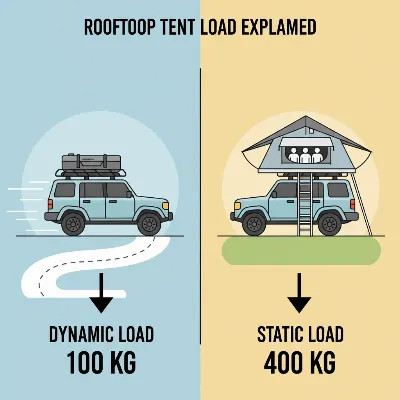 An infographic illustrating the difference between dynamic and static load limits for heavy-duty roof racks with an overland tent.
Conclusion
A heavy-duty roof rack is an indispensable component for any serious overlander looking to equip their vehicle with an overland tent. It’s more than just a place to mount your gear; it’s the very foundation of your mobile basecamp, dictating safety, stability, and the overall success of your adventures. By carefully considering your specific needs, understanding load capacities, choosing durable materials, and selecting a reputable brand, you can confidently invest in a system that will reliably support your explorations for years to come. With the right heavy-duty roof rack, the open road—and the wilderness beyond—beckons with endless possibilities. Are you ready to elevate your overlanding experience?
Frequently Asked Questions
How to Choose a Heavy-Duty Roof Rack
Selecting the right heavy-duty roof rack for your overland tent involves assessing your needs, checking vehicle compatibility, and understanding load ratings to ensure safety and functionality.
Determine the size and weight of your overland tent and any additional gear you plan to carry. This includes items like spare tires, fuel cans, or recovery equipment. Understanding your total intended load will help you select a rack with appropriate load capacities and dimensions.
Consult your vehicle's owner's manual for its maximum roof load limits. Pay close attention to both the dynamic load rating (for when the vehicle is in motion, typically 75-100 kg for RTTs) and the static load rating (for when the vehicle is stationary, crucial for occupied rooftop tents). Always default to the lowest rating among your vehicle, rack, and tent.
Choose between aluminum or steel racks based on your priorities. Aluminum racks are lightweight and corrosion-resistant, while steel racks offer maximum durability and strength but are heavier. Look for powder-coated finishes to prevent rust and enhance longevity, ensuring the rack can withstand harsh weather and demanding trails.
Determine how the rack mounts to your vehicle; some attach to factory rails, while others require drilling. A system using existing factory mounting points can simplify installation and preserve resale value. Also, consider the availability of T-slot channels or modular designs for easily attaching accessories like lights, awnings, or shovels.

I picked up a Yakima LockNLoad Platform for my truck, mostly for the dynamic forces rating. It holds my tent well, but I found the wind noise at highway speeds to be a bit more noticeable than I’d hoped. It’s not a dealbreaker, and it’s certainly strong enough, but something to consider if you do a lot of long-distance driving.
I recently installed the Front Runner Slimline II on my Jeep for an upcoming overlanding trip, and it’s been fantastic. The build quality is super solid, exactly what you need for carrying a heavy rooftop tent. It handled some pretty rough trails without any issues, and I felt confident the whole time that my gear was secure. Definitely worth the investment for serious adventurers.
I went with the Rhino-Rack Pioneer Platform after reading about its durability. It’s definitely a robust system and perfect for my RTT. My only minor complaint is that the initial assembly took a bit longer than I expected, even with the instructions. Once it was on, though, it’s been rock-solid and I’ve had no concerns about the static weight of my tent and me in it.
This guide really helped me understand why a heavy-duty rack is so crucial for an overland tent. I ended up getting the Thule Tepui HyBox, and it’s been a game-changer for my weekend trips. The extra carrying capacity for other gear besides the tent is a huge plus, making my setup much more versatile for longer adventures.