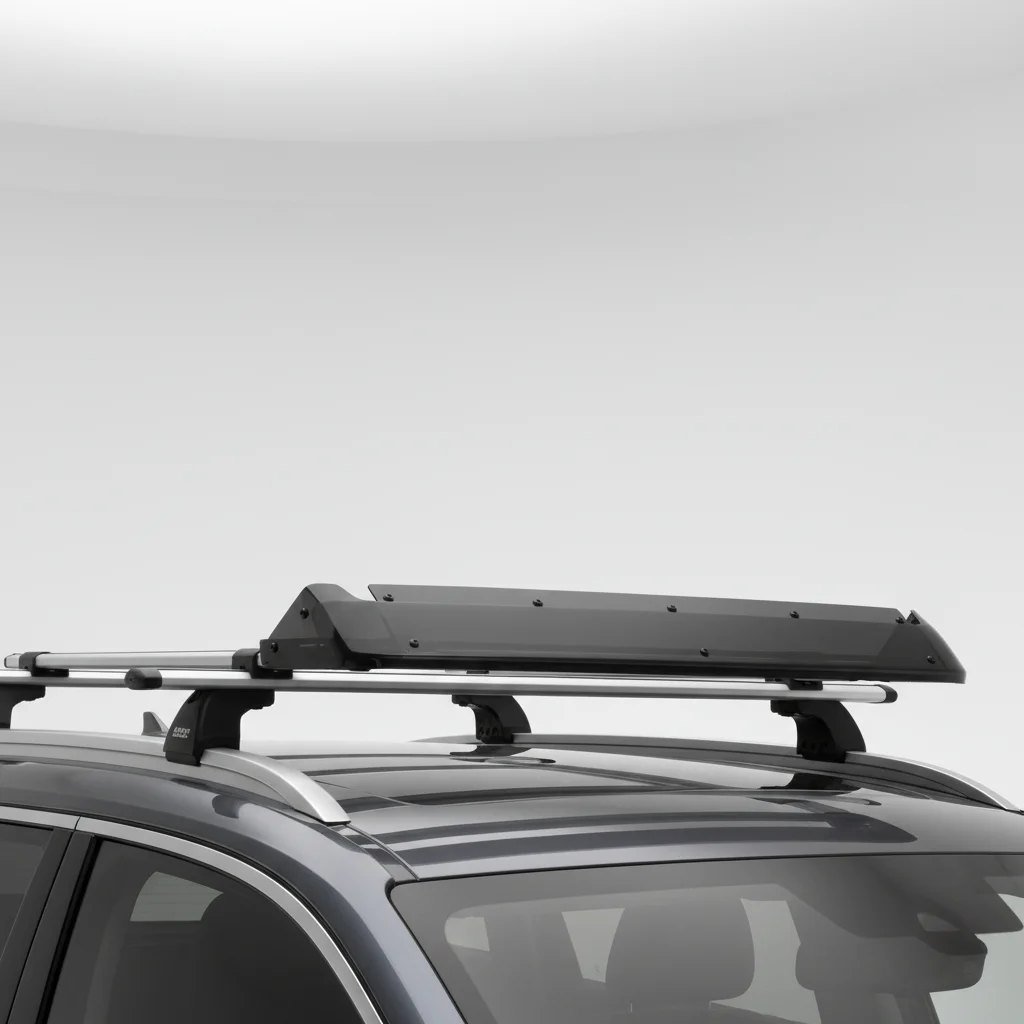
Roof rack wind deflectors are designed to reduce wind noise and drag caused by an installed roof rack system. While their effectiveness can vary depending on the specific vehicle, roof rack design, and deflector model, many users report a noticeable reduction in wind noise, particularly at highway speeds. They work by redirecting airflow over and around the front of the roof rack, minimizing the turbulence that generates sound.
The primary function of a wind deflector is to create a smoother aerodynamic profile for your roof rack. Without one, the leading edge of your crossbars and towers can create significant air resistance and a whistling or humming sound. By providing a ramp-like surface, the deflector helps the air flow more cleanly over the rack, leading to a quieter ride and potentially a slight improvement in fuel efficiency, though the latter is often marginal.
How Wind Deflectors Reduce Noise
Wind deflectors, also known as fairings, primarily combat wind noise by disrupting the turbulent airflow that forms around the front of a roof rack. When air hits the blunt edges of crossbars and towers, it creates vortices and vibrations that manifest as audible noise inside the cabin. A deflector presents a smooth, angled surface that guides the air up and over these components, preventing the direct impact and subsequent turbulence.
The angle and curvature of the deflector are crucial to its performance. A well-designed deflector will create a laminar flow of air, meaning the air moves in smooth, parallel layers, rather than chaotic, swirling patterns. This reduction in turbulence is the key to minimizing the whistling, humming, and roaring sounds often associated with roof racks, especially when traveling at higher speeds.
Installation and Compatibility Considerations
Installing a roof rack wind deflector is generally a straightforward process, often involving clamps or straps that secure it to the front crossbar. Most deflectors are designed to be universal or semi-universal, fitting a range of crossbar shapes and sizes, including square, round, aero, and elliptical bars. However, it’s essential to check the product specifications for compatibility with your specific roof rack brand and model.
Proper positioning is vital for optimal performance. The deflector should be mounted as close to the front edge of the first crossbar as possible, without interfering with any other roof-mounted accessories or the vehicle’s sunroof operation. Ensure it is centered and securely fastened to prevent it from shifting or vibrating, which could ironically introduce new noise or even damage.
- Verify deflector length matches your crossbar width.
- Ensure clearance for sunroof or other roof accessories.
- Tighten all mounting hardware securely to prevent movement.
- Check for any contact points with the vehicle’s paint.
- Consider a deflector with a rubberized edge to protect your roof.
Impact on Fuel Efficiency
|
Our Picks for the Best Roof Rack in 2026
As an Amazon Associate I earn from qualifying purchases.
|
||
| Num | Product | Action |
|---|---|---|
| 1 | munirater Universal 43.3 inch Black Roof Rack Cross Bar Top Luggage Aluminum Carrier Adjustable Window Frame 2Pcs |

|
| 2 | MAXXHAUL 50506 64" x 39" x 6" Heavy-Duty Universal Steel Roof Rack , Black |
|
| 3 | KitsPro 260lb Roof Rack Cross Bars for 2011-2021 Jeep Grand Cherokee (ONLY FIT Factory Grooved Side Rails), Matte Black Heavy Duty Aluminum Cargo Crossbar |
|
| 4 | 64 x 39 x 6 Inch Roof Rack Basket, Heavy Duty 300LB Car Roof Rack Universal Cargo Carrier Rooftop Cargo Basket Steel Luggage Holder for SUV, Truck & Pickup |
|
| 5 | MaxxHaul Steel Roof Rack Cargo Basket, 46" x 36" x 4.5" Roof Top Carrier, Universal Fit for Cars, SUVs, Vans, and RVs, 150 lb Capacity, Weather-Resistant Easy-Install Cargo Storage (70115) |
|
| 6 | GarveeLife 51 in x 36 in Universal Roof Rack Carrier Basket, 200 LBS Capacity Rooftop Cargo Rack, Car Top Luggage Holder Basket Heavy Duty for SUVs, Trucks, Vehicles |
|
| 7 | MeeFar Roof Rack Carrier Basket Universal Rooftop 51" X 36" X 5" + Waterproof Bag 15 Cubic Feet (44" 34" 17"), and Cargo Net with Attachment Hooks, Ratchet Straps |
|
| 8 | GarveeLife 51 in x 36 in Universal Roof Rack Basket, 200 LBS Capacity Rooftop Cargo Carrier Basket, Heavy Duty Luggage Holder Rack for SUVs, Trucks, Vehicles |
|
| 9 | Auto Dynasty Roof Rack Cross Bars Compatible with 2014-2018 Acura MDX, 165lbs Rooftop Cargo Bars Aluminum Anti-Corrosion Bolt-On Roof Rails for Luggage Bike Kayak Racks |
|
| 10 | GarveeLife 46" x 36" Universal Roof Rack Cargo Carrier Basket, 200 Lbs Capacity Rooftop Cargo Rack, Car Top Luggage Holder Basket Heavy Duty for SUVs, Trucks, Vehicles |
|
While the primary benefit of a roof rack wind deflector is noise reduction, many users also wonder about its effect on fuel efficiency. The theory is that by reducing aerodynamic drag, a deflector should lead to better gas mileage. In practice, the impact on fuel efficiency is often minimal, though it can be measurable in some cases.
Roof racks themselves significantly increase aerodynamic drag, which directly impacts fuel consumption. A deflector can mitigate some of this added drag, but it won’t eliminate it entirely. Studies and real-world tests have shown that while a deflector might offer a slight improvement (often in the range of 1-3%), the most significant factor in fuel efficiency remains the presence of the roof rack itself and any cargo loaded onto it. For maximum fuel savings, removing the roof rack when not in use is the most effective strategy.
Choosing the Right Wind Deflector
When selecting a roof rack wind deflector, consider several factors to ensure you get the best performance and compatibility. First, measure the width of your front crossbar to choose a deflector that spans its entire length for maximum effectiveness. Second, look for durable materials like high-impact plastic or aluminum that can withstand various weather conditions and road debris.
Consider the mounting mechanism; some deflectors offer quick-release systems, while others require tools for installation. Read reviews to gauge real-world performance regarding noise reduction and durability. Brands like Thule and Yakima offer their own branded fairings designed to integrate seamlessly with their respective roof rack systems, often providing the best fit and finish.For universal options, look for reputable aftermarket manufacturers.
Are Wind Deflectors Worth the Investment?
For many roof rack owners, a wind deflector is a worthwhile investment, especially if they frequently experience bothersome wind noise during their travels. The cost of a deflector is relatively low compared to the overall price of a roof rack system, and the improvement in cabin quietness can significantly enhance the driving experience.
If you’re particularly sensitive to noise or frequently embark on long road trips with your roof rack installed, a wind deflector can make a noticeable difference. While the fuel efficiency gains are typically minor, the primary benefit of a quieter ride often justifies the purchase for those seeking a more peaceful journey.

This deflector really helped with the wind noise from my Yakima crossbars. Before, it sounded like a constant hum above 50 mph, which was super annoying. It doesn’t eliminate all the noise, but it’s a huge improvement. I haven’t noticed a big change in fuel efficiency, but the quieter ride alone makes me happy with the purchase.
I got a universal wind deflector for my older Honda CR-V. It did reduce some of the wind turbulence, especially the low rumble I used to hear. However, the installation was a bit fiddly, and it doesn’t look as integrated as I’d hoped. It works okay, but I was expecting a more dramatic reduction in sound.
My roof rack used to create so much drag and noise, especially when I had my cargo box on. Adding this wind deflector made a noticeable difference in how smooth the air flows over the rack. It’s much quieter now, and I feel like the car handles a bit better in crosswinds too. Highly recommend for anyone with a full roof setup.
I was skeptical about a roof rack wind deflector, but after installing one on my Subaru Outback with a Thule system, the difference is night and day. The whistling sound at highway speeds used to drive me crazy, especially on long trips. Now, it’s significantly quieter, making conversations and music much more enjoyable. Definitely worth the investment for anyone dealing with wind noise.