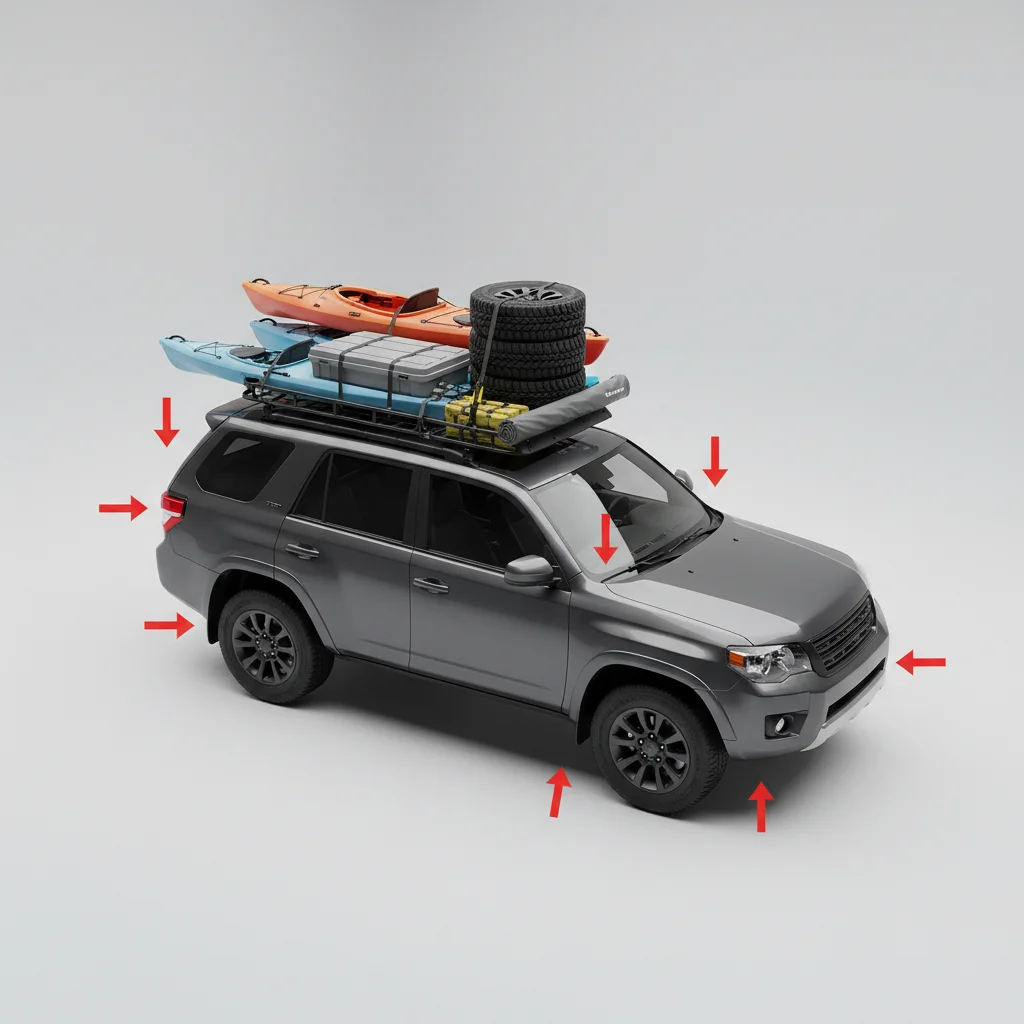
Proper roof rack weight distribution is crucial for safe driving and preventing damage to your vehicle and gear. The key is to keep the heaviest items centered and low, aiming for an even spread across the crossbars. This approach minimizes sway, improves vehicle handling, and reduces stress on the roof rack system itself.
Understanding Your Vehicle’s Weight Limits
Before loading anything, always consult your vehicle’s owner’s manual for its dynamic (driving) and static (parked) roof weight capacities. These limits are non-negotiable and include the weight of the roof rack itself. Exceeding these limits can compromise your vehicle’s stability, braking, and even lead to structural damage. Remember that the roof rack’s capacity might be lower than your vehicle’s, so always defer to the lower of the two.
Strategic Loading for Optimal Balance
When loading, place heavier items directly over or as close as possible to the vehicle’s crossbars. Distribute the weight evenly from front to back and side to side. Avoid stacking all heavy items on one side, which can create an imbalance and make the vehicle difficult to control, especially during turns or strong winds. For long items like kayaks or lumber, ensure they are supported by both crossbars and secured at multiple points.
- Place heaviest items centrally and low.
- Distribute weight evenly across both crossbars.
- Secure all items tightly to prevent shifting.
- Avoid overloading one side of the rack.
- Use tie-downs and straps to prevent movement.
Securing Your Cargo Effectively
|
Our Picks for the Best Roof Rack in 2026
As an Amazon Associate I earn from qualifying purchases.
|
||
| Num | Product | Action |
|---|---|---|
| 1 | GarveeLife 51 in x 36 in Universal Roof Rack Basket, 200 LBS Capacity Rooftop Cargo Carrier Basket, Heavy Duty Luggage Holder Rack for SUVs, Trucks, Vehicles |

|
| 2 | munirater Universal 43.3 inch Black Roof Rack Cross Bar Top Luggage Aluminum Carrier Adjustable Window Frame 2Pcs |
|
| 3 | KitsPro 260lb Roof Rack Cross Bars for 2011-2021 Jeep Grand Cherokee (ONLY FIT Factory Grooved Side Rails), Matte Black Heavy Duty Aluminum Cargo Crossbar |
|
| 4 | MeeFar Roof Rack Carrier Basket Universal Rooftop 51" X 36" X 5" + Waterproof Bag 15 Cubic Feet (44" 34" 17"), and Cargo Net with Attachment Hooks, Ratchet Straps |
|
| 5 | GarveeLife 51 in x 36 in Universal Roof Rack Carrier Basket, 200 LBS Capacity Rooftop Cargo Rack, Car Top Luggage Holder Basket Heavy Duty for SUVs, Trucks, Vehicles |
|
| 6 | Auto Dynasty Roof Rack Cross Bars Compatible with 2014-2018 Acura MDX, 165lbs Rooftop Cargo Bars Aluminum Anti-Corrosion Bolt-On Roof Rails for Luggage Bike Kayak Racks |
|
| 7 | 64 x 39 x 6 Inch Roof Rack Basket, Heavy Duty 300LB Car Roof Rack Universal Cargo Carrier Rooftop Cargo Basket Steel Luggage Holder for SUV, Truck & Pickup |
|
| 8 | MaxxHaul Steel Roof Rack Cargo Basket, 46" x 36" x 4.5" Roof Top Carrier, Universal Fit for Cars, SUVs, Vans, and RVs, 150 lb Capacity, Weather-Resistant Easy-Install Cargo Storage (70115) |
|
| 9 | MAXXHAUL 50506 64" x 39" x 6" Heavy-Duty Universal Steel Roof Rack , Black |
|
| 10 | GarveeLife 46" x 36" Universal Roof Rack Cargo Carrier Basket, 200 Lbs Capacity Rooftop Cargo Rack, Car Top Luggage Holder Basket Heavy Duty for SUVs, Trucks, Vehicles |
|
Once loaded, securing your cargo is paramount. Use high-quality straps, ropes, or nets to tie down all items firmly. Check for any slack and ensure that nothing can shift during transit. For items like cargo boxes, make sure they are properly latched and locked. Regularly check your tie-downs during long journeys, as vibrations and road conditions can sometimes loosen them. A good set of cam buckle straps, like those found at, can make a significant difference in security.
Impact on Driving Dynamics
An improperly loaded roof rack can significantly alter your vehicle’s center of gravity, affecting handling, braking, and fuel efficiency. You might experience increased body roll, longer braking distances, and more pronounced wind noise. Drive more cautiously, especially when cornering or in windy conditions. Reduce your speed and allow for greater stopping distances to compensate for the altered dynamics. Consider investing in aerodynamic fairings to reduce wind noise and drag, which can be found at.
Post-Trip Unloading and Inspection
After your trip, carefully unload your roof rack. Take this opportunity to inspect both your gear and the roof rack system for any signs of wear, damage, or stress. Check the integrity of the crossbars, towers, and any mounting hardware. Regular inspection and maintenance will extend the life of your roof rack and ensure its continued safe operation for future adventures.

I tried to follow the tips about even spread across the crossbars, but it’s tough with my odd-shaped fishing gear. I wish there were more specific examples for really bulky, non-uniform items. Still, the general principle of minimizing sway is good, and I’m trying to adapt it as best I can.
I used to just throw everything up there, but after reading about keeping the heaviest items centered and low, it’s made a huge difference. My kayak and camping gear feel so much more secure now. The car handles way better on the highway, even with a full load. Definitely a game changer for long trips.
Understanding dynamic vs. static roof weight capacities was a lightbulb moment for me. I never considered that driving changes the stress on the roof. Since I started loading more strategically, my fuel efficiency seems a little better too, which is a nice bonus. Great practical advice.
This advice on checking both the vehicle’s and the roof rack’s weight limits was super helpful. I always just assumed the car’s limit was the only one that mattered. It’s a bit of a hassle to look up, but knowing I’m not overloading makes me feel a lot safer, especially with my bike carrier.