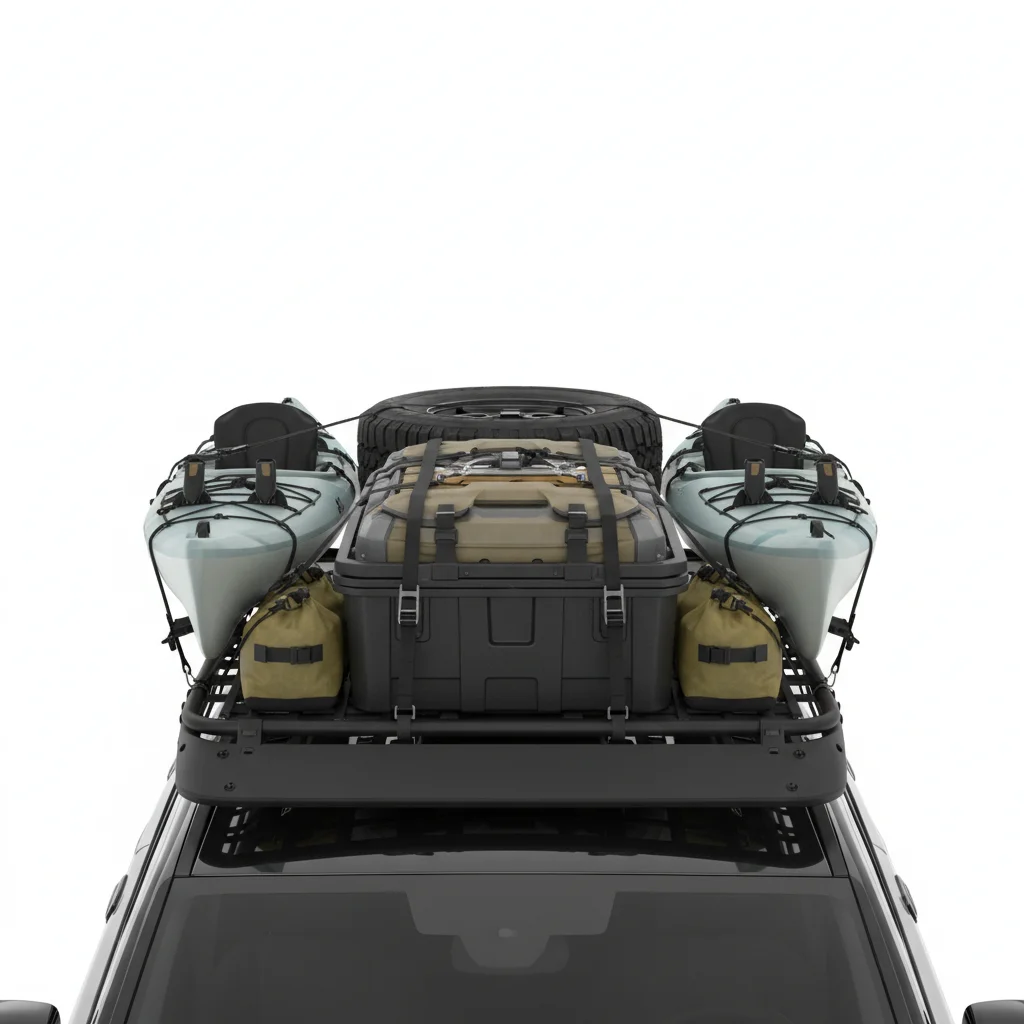
Proper roof rack weight distribution is crucial for both safety and vehicle performance. Improper loading can lead to instability, reduced fuel efficiency, and even damage to your vehicle or the roof rack itself. The key is to distribute the load as evenly as possible, keeping the heaviest items centered and low, and never exceeding your vehicle’s or roof rack’s maximum weight capacity.
Understanding Your Vehicle’s Weight Limits
Before loading anything onto your roof rack, consult your vehicle’s owner’s manual and the roof rack’s instruction manual to determine the maximum dynamic and static weight capacities. Dynamic capacity refers to the weight the rack can safely carry while the vehicle is in motion, while static capacity is for when the vehicle is parked. Exceeding these limits can compromise handling, braking, and overall safety. Always factor in the weight of the roof rack system itself when calculating available capacity.
Centering the Heaviest Items
The fundamental principle of good roof rack weight distribution is to place the heaviest items directly over the vehicle’s crossbars and as close to the center of the roof as possible. This minimizes leverage and reduces the impact on your vehicle’s center of gravity. When heavy items are placed off-center, they can create a pendulum effect, making the vehicle more prone to swaying, especially during turns or in windy conditions. Use strong, non-stretch tie-downs to secure these items firmly.
Distributing Lighter Gear Evenly
|
Our Picks for the Best Roof Rack in 2026
As an Amazon Associate I earn from qualifying purchases.
|
||
| Num | Product | Action |
|---|---|---|
| 1 | MAXXHAUL 50506 64" x 39" x 6" Heavy-Duty Universal Steel Roof Rack , Black |

|
| 2 | MaxxHaul Steel Roof Rack Cargo Basket, 46" x 36" x 4.5" Roof Top Carrier, Universal Fit for Cars, SUVs, Vans, and RVs, 150 lb Capacity, Weather-Resistant Easy-Install Cargo Storage (70115) |
|
| 3 | 64 x 39 x 6 Inch Roof Rack Basket, Heavy Duty 300LB Car Roof Rack Universal Cargo Carrier Rooftop Cargo Basket Steel Luggage Holder for SUV, Truck & Pickup |
|
| 4 | KitsPro 260lb Roof Rack Cross Bars for 2011-2021 Jeep Grand Cherokee (ONLY FIT Factory Grooved Side Rails), Matte Black Heavy Duty Aluminum Cargo Crossbar |
|
| 5 | munirater Universal 43.3 inch Black Roof Rack Cross Bar Top Luggage Aluminum Carrier Adjustable Window Frame 2Pcs |
|
| 6 | Auto Dynasty Roof Rack Cross Bars Compatible with 2014-2018 Acura MDX, 165lbs Rooftop Cargo Bars Aluminum Anti-Corrosion Bolt-On Roof Rails for Luggage Bike Kayak Racks |
|
| 7 | GarveeLife 51 in x 36 in Universal Roof Rack Carrier Basket, 200 LBS Capacity Rooftop Cargo Rack, Car Top Luggage Holder Basket Heavy Duty for SUVs, Trucks, Vehicles |
|
| 8 | GarveeLife 46" x 36" Universal Roof Rack Cargo Carrier Basket, 200 Lbs Capacity Rooftop Cargo Rack, Car Top Luggage Holder Basket Heavy Duty for SUVs, Trucks, Vehicles |
|
| 9 | MeeFar Roof Rack Carrier Basket Universal Rooftop 51" X 36" X 5" + Waterproof Bag 15 Cubic Feet (44" 34" 17"), and Cargo Net with Attachment Hooks, Ratchet Straps |
|
| 10 | GarveeLife 51 in x 36 in Universal Roof Rack Basket, 200 LBS Capacity Rooftop Cargo Carrier Basket, Heavy Duty Luggage Holder Rack for SUVs, Trucks, Vehicles |
|
Once the heaviest items are secured, distribute lighter gear around them, filling in gaps and ensuring the load is balanced from front to back and side to side. Avoid stacking items too high, as this can increase wind resistance and make the vehicle top-heavy. If you’re carrying multiple smaller items, consider using a cargo bag or box to consolidate them and provide a more aerodynamic profile.
Securing Your Load Properly
Regardless of what you’re carrying, proper securing is paramount. Use multiple tie-down points and ensure straps are taut and free of twists. Periodically check your load during long journeys, especially after the first few miles, to ensure everything remains secure. Loose items can shift, creating an imbalance and potentially becoming a hazard to other drivers. Consider using cam buckle straps for quick adjustments and ratchet straps for heavier, more stable loads.
- Always check vehicle and roof rack weight limits.
- Place heaviest items centrally and low on the rack.
- Distribute lighter items evenly to balance the load.
- Use multiple, strong tie-downs for all cargo.
- Re-check load security periodically during travel.
Impact on Driving Dynamics
Even with perfect roof rack weight distribution, carrying a load on your roof will alter your vehicle’s driving dynamics. Expect increased wind noise, a higher center of gravity, and potentially longer braking distances. Adjust your driving style accordingly: reduce speed, increase following distance, and take turns more slowly. Be particularly mindful of crosswinds, which can have a greater impact on a loaded vehicle.
