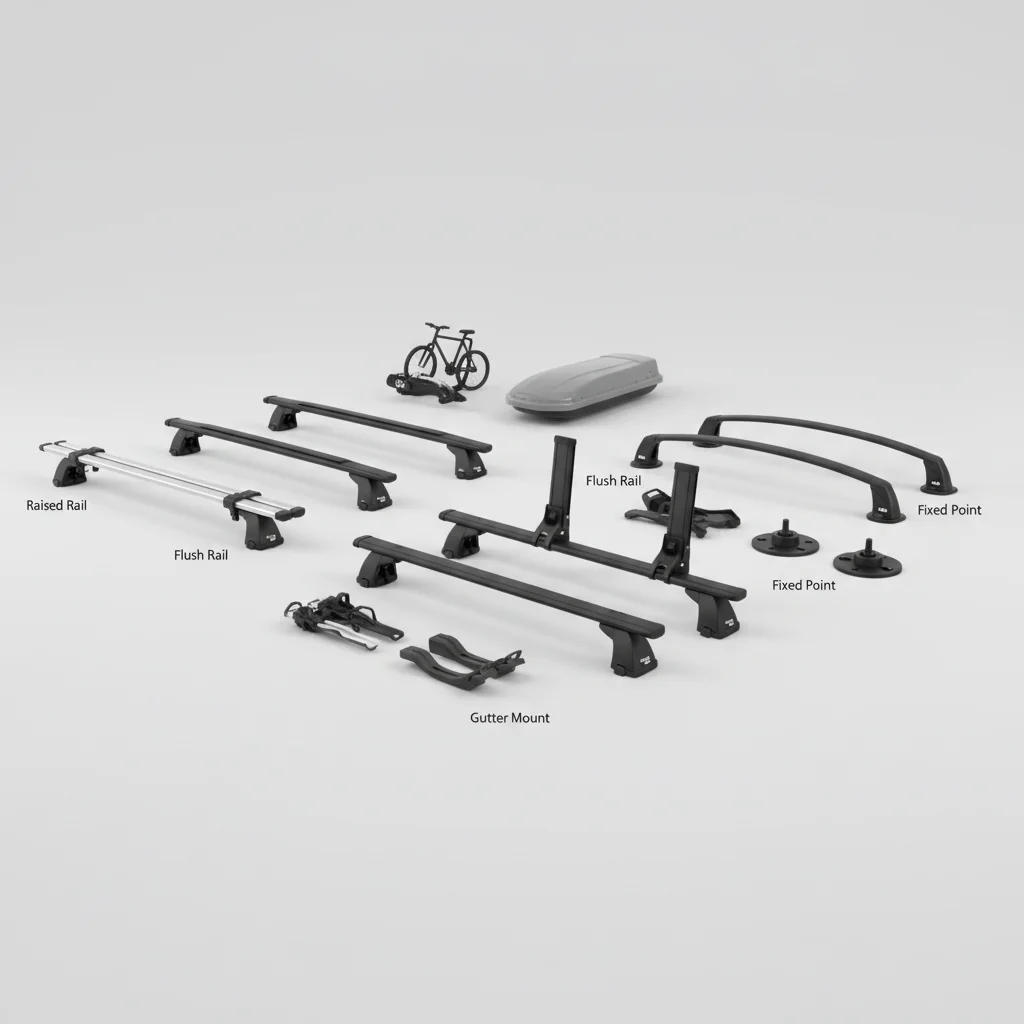
Choosing the right roof rack type for your car depends on several factors, including your vehicle’s roof design, the cargo you plan to carry, and your budget. There are generally five main types of roof rack systems available, each designed to fit specific vehicle configurations and user needs. Understanding these differences is crucial for selecting a system that offers both security and convenience for your adventures.
Understanding Different Roof Rack Systems
The most common roof rack systems include those designed for bare roofs, raised rails, flush rails, fixed points, and rain gutters. Each system utilizes different attachment methods to securely fasten to your vehicle. For instance, bare roof systems often use door frame clamps, while vehicles with raised rails allow for a simpler clamp-around installation. The choice directly impacts ease of installation, load capacity, and overall aesthetics.
- Bare Roof Systems: Attach to the door frames, ideal for vehicles without pre-installed roof features.
- Raised Rail Systems: Clamp directly onto existing raised side rails, offering a straightforward installation.
- Flush Rail Systems: Integrate seamlessly with flush-mounted rails, providing a sleek, low-profile look.
- Fixed Point Systems: Bolt into pre-threaded points on the vehicle’s roof, offering a very secure and integrated fit.
- Rain Gutter Systems: Clamp onto the rain gutters, common on older vehicles or those with specific utility designs.
Bare Roof Racks: Versatility for Most Vehicles
Bare roof racks are incredibly versatile, as they can be fitted to almost any vehicle that doesn’t have existing rails or fixed points. These systems typically consist of crossbars, towers, and vehicle-specific fit kits that include pads and clamps. The clamps secure the towers to the door frame, distributing the weight evenly. While highly adaptable, it’s essential to ensure the fit kit is precisely matched to your car’s make and model for safety and proper load distribution.
Raised Rail and Flush Rail Systems: Integrated Solutions
|
Our Picks for the Best Roof Rack in 2026
As an Amazon Associate I earn from qualifying purchases.
|
||
| Num | Product | Action |
|---|---|---|
| 1 | KitsPro 260lb Roof Rack Cross Bars for 2011-2021 Jeep Grand Cherokee (ONLY FIT Factory Grooved Side Rails), Matte Black Heavy Duty Aluminum Cargo Crossbar |

|
| 2 | munirater Universal 43.3 inch Black Roof Rack Cross Bar Top Luggage Aluminum Carrier Adjustable Window Frame 2Pcs |
|
| 3 | Auto Dynasty Roof Rack Cross Bars Compatible with 2014-2018 Acura MDX, 165lbs Rooftop Cargo Bars Aluminum Anti-Corrosion Bolt-On Roof Rails for Luggage Bike Kayak Racks |
|
| 4 | MAXXHAUL 50506 64" x 39" x 6" Heavy-Duty Universal Steel Roof Rack , Black |
|
| 5 | 64 x 39 x 6 Inch Roof Rack Basket, Heavy Duty 300LB Car Roof Rack Universal Cargo Carrier Rooftop Cargo Basket Steel Luggage Holder for SUV, Truck & Pickup |
|
| 6 | MaxxHaul Steel Roof Rack Cargo Basket, 46" x 36" x 4.5" Roof Top Carrier, Universal Fit for Cars, SUVs, Vans, and RVs, 150 lb Capacity, Weather-Resistant Easy-Install Cargo Storage (70115) |
|
| 7 | MeeFar Roof Rack Carrier Basket Universal Rooftop 51" X 36" X 5" + Waterproof Bag 15 Cubic Feet (44" 34" 17"), and Cargo Net with Attachment Hooks, Ratchet Straps |
|
| 8 | GarveeLife 51 in x 36 in Universal Roof Rack Carrier Basket, 200 LBS Capacity Rooftop Cargo Rack, Car Top Luggage Holder Basket Heavy Duty for SUVs, Trucks, Vehicles |
|
| 9 | GarveeLife 46" x 36" Universal Roof Rack Cargo Carrier Basket, 200 Lbs Capacity Rooftop Cargo Rack, Car Top Luggage Holder Basket Heavy Duty for SUVs, Trucks, Vehicles |
|
| 10 | GarveeLife 51 in x 36 in Universal Roof Rack Basket, 200 LBS Capacity Rooftop Cargo Carrier Basket, Heavy Duty Luggage Holder Rack for SUVs, Trucks, Vehicles |
|
Vehicles equipped with raised rails or flush rails offer more integrated and often more aesthetically pleasing roof rack solutions. Raised rail systems are perhaps the easiest to install, as the towers simply clamp around the existing rails. Flush rail systems, on the other hand, provide a sleeker look by integrating the towers directly into the flush rails, often requiring a more specific fit kit to ensure a secure and aerodynamic profile. Both types offer excellent load-bearing capabilities and are popular for their ease of use and clean appearance.
Fixed Point and Rain Gutter Racks: Specialized Attachments
Fixed point roof racks utilize pre-drilled, threaded points on your vehicle’s roof, offering one of the most secure and integrated installations. These systems are often found on newer vehicles and provide a very clean look when the rack is removed. Rain gutter systems, while less common on modern cars, are still a viable option for older vehicles or vans with prominent rain gutters. They offer a robust attachment point and are known for their high load capacities.
Choosing the Right System for Your Cargo
Beyond the vehicle’s roof type, consider the kind of cargo you’ll be transporting. If you’re hauling kayaks, bikes, or skis, you’ll need a system that can accommodate specific attachments. For heavy cargo boxes or rooftop tents, a robust system with a high weight capacity is paramount. Always check both the roof rack’s weight limit and your vehicle’s maximum roof load capacity to ensure safe operation. The right roof rack type not only fits your car but also safely supports your gear, making every journey smoother.
