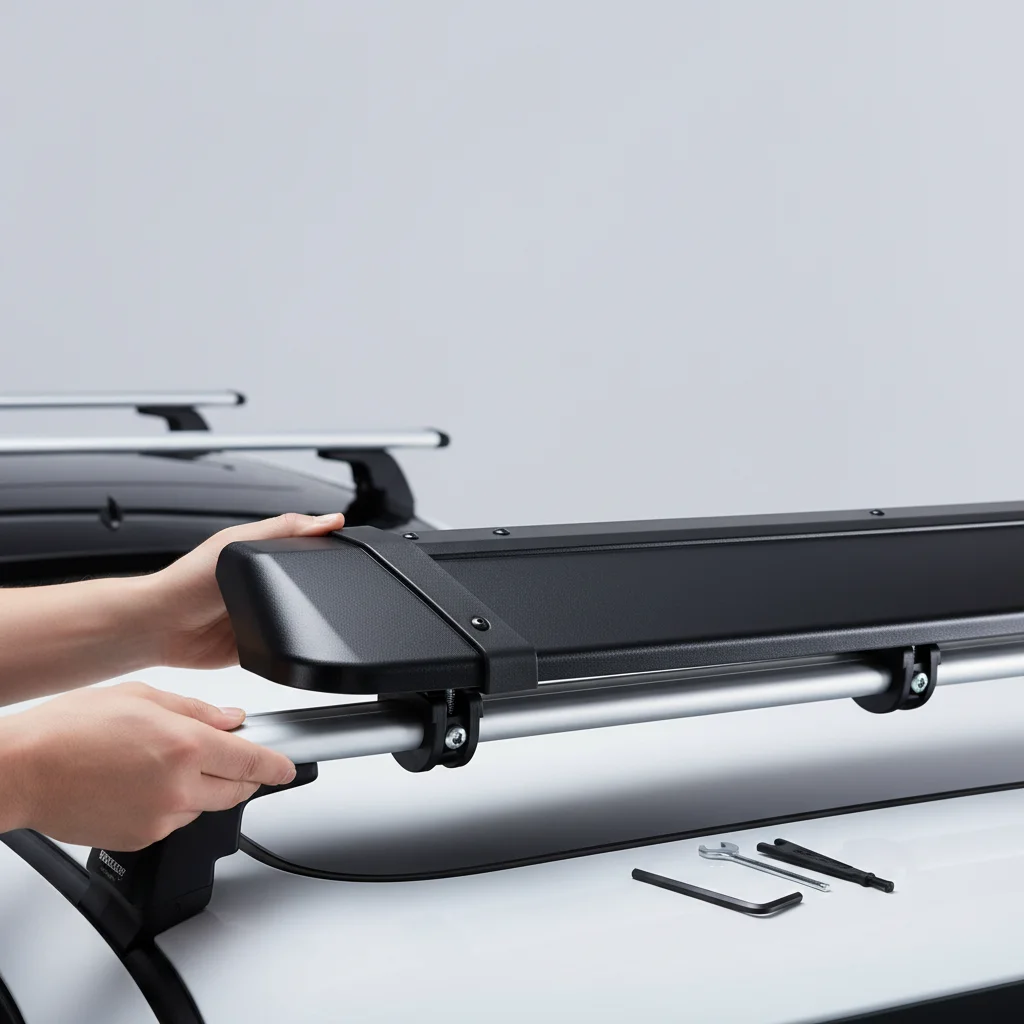
Installing a roof rack fairing can significantly reduce wind noise and drag, making your drives much quieter and potentially more fuel-efficient. While the exact steps vary slightly by fairing and roof rack model, the general process involves securing the fairing to the front crossbar, ensuring proper alignment, and tightening the mounting hardware. This DIY guide will walk you through the typical installation process, helping you achieve a smoother, more serene journey with your roof rack system.
Understanding Your Roof Rack Fairing Kit
Before you begin, familiarize yourself with all the components included in your roof rack fairing kit. Most kits will contain the fairing itself, mounting brackets, rubber pads or strips to protect your crossbar, and various screws or bolts. It’s crucial to identify each part and understand its function. Some fairings are designed for specific crossbar shapes (round, square, aero), so confirm compatibility with your existing roof rack. Always refer to the manufacturer’s instructions for your specific model, as they may have unique requirements or tips.
Preparing for Installation
Start by cleaning the front crossbar of your roof rack where the fairing will be mounted. Remove any dirt, grime, or old adhesive residue to ensure a secure and clean attachment. Gather all necessary tools, which typically include a Phillips head screwdriver, an Allen wrench (if your kit uses hex bolts), and possibly a measuring tape. It’s often helpful to have a second person assist you, especially when positioning the fairing on larger vehicles or if you’re working with a particularly long fairing.
Mounting the Brackets and Fairing
The first step in mounting is usually to attach the rubber pads or protective strips to the mounting brackets. These pads prevent scratching your crossbar and provide a better grip. Next, loosely attach the mounting brackets to the fairing itself, following the pre-drilled holes. Do not tighten them fully yet. With the brackets attached, carefully position the fairing onto the front crossbar of your roof rack. Ensure it is centered and that the fairing’s curve matches the contour of your vehicle’s roof as much as possible. This alignment is key for optimal aerodynamics and aesthetics.
- Center the fairing on your front crossbar.
- Ensure the fairing’s angle is appropriate for your vehicle’s roofline.
- Check that all mounting points are securely engaged.
- Verify there is no interference with other roof rack accessories.
- Confirm the fairing does not obstruct your view.
Adjusting and Securing the Fairing
|
Our Picks for the Best Roof Rack in 2026
As an Amazon Associate I earn from qualifying purchases.
|
||
| Num | Product | Action |
|---|---|---|
| 1 | MAXXHAUL 50506 64" x 39" x 6" Heavy-Duty Universal Steel Roof Rack , Black |

|
| 2 | GarveeLife 51 in x 36 in Universal Roof Rack Carrier Basket, 200 LBS Capacity Rooftop Cargo Rack, Car Top Luggage Holder Basket Heavy Duty for SUVs, Trucks, Vehicles |
|
| 3 | 64 x 39 x 6 Inch Roof Rack Basket, Heavy Duty 300LB Car Roof Rack Universal Cargo Carrier Rooftop Cargo Basket Steel Luggage Holder for SUV, Truck & Pickup |
|
| 4 | GarveeLife 51 in x 36 in Universal Roof Rack Basket, 200 LBS Capacity Rooftop Cargo Carrier Basket, Heavy Duty Luggage Holder Rack for SUVs, Trucks, Vehicles |
|
| 5 | KitsPro 260lb Roof Rack Cross Bars for 2011-2021 Jeep Grand Cherokee (ONLY FIT Factory Grooved Side Rails), Matte Black Heavy Duty Aluminum Cargo Crossbar |
|
| 6 | MeeFar Roof Rack Carrier Basket Universal Rooftop 51" X 36" X 5" + Waterproof Bag 15 Cubic Feet (44" 34" 17"), and Cargo Net with Attachment Hooks, Ratchet Straps |
|
| 7 | GarveeLife 46" x 36" Universal Roof Rack Cargo Carrier Basket, 200 Lbs Capacity Rooftop Cargo Rack, Car Top Luggage Holder Basket Heavy Duty for SUVs, Trucks, Vehicles |
|
| 8 | MaxxHaul Steel Roof Rack Cargo Basket, 46" x 36" x 4.5" Roof Top Carrier, Universal Fit for Cars, SUVs, Vans, and RVs, 150 lb Capacity, Weather-Resistant Easy-Install Cargo Storage (70115) |
|
| 9 | Auto Dynasty Roof Rack Cross Bars Compatible with 2014-2018 Acura MDX, 165lbs Rooftop Cargo Bars Aluminum Anti-Corrosion Bolt-On Roof Rails for Luggage Bike Kayak Racks |
|
| 10 | munirater Universal 43.3 inch Black Roof Rack Cross Bar Top Luggage Aluminum Carrier Adjustable Window Frame 2Pcs |
|
Once the fairing is in place, begin to tighten the mounting hardware. Work from the center outwards, tightening each screw or bolt incrementally. As you tighten, periodically check the fairing’s alignment and adjust as needed. The goal is a snug fit that prevents movement without over-tightening, which could damage the fairing or your crossbar. Some fairings allow for slight angle adjustments; experiment with these to find the position that offers the best noise reduction for your vehicle. A common recommendation is to have the fairing sit just above the roofline, creating a smooth transition for airflow.
After all hardware is tightened, give the fairing a gentle shake to ensure it’s secure. Take your vehicle for a short test drive, paying attention to any new noises or vibrations. If you notice excessive wind noise, you may need to re-adjust the fairing’s position or angle. Remember that even a small adjustment can make a significant difference in reducing noise. For a wide selection of fairings and mounting kits, consider checking out.
Maintenance and Troubleshooting
Regularly inspect your roof rack fairing for any signs of wear, loose hardware, or damage. Over time, exposure to the elements can degrade rubber components or cause bolts to loosen. Re-tighten any loose fasteners and replace worn-out rubber pads as needed. If you experience persistent wind noise after installation, double-check the fairing’s alignment and ensure there are no gaps between the fairing and the crossbar. Sometimes, adding extra weather stripping or foam tape to contact points can further reduce noise. For replacement parts or alternative fairing options, explore.

The tips on reducing wind noise were helpful, and the general process was easy to follow. However, my kit had some really tiny screws that were a pain to work with, and the guide didn’t really address that. I wish there were more specific tips for different crossbar shapes, as mine is a bit aerodynamic and made the rubber pads tricky to position perfectly. It’s quieter now, but not as dramatic as I hoped.
This guide was a lifesaver! I had a Thule fairing sitting in my garage for months because I was intimidated by the installation. The breakdown of identifying each part and understanding its function really helped. It still took me a bit longer than I expected to get the alignment just right, but the end result is worth it. Much less drag now.
Seriously, if you have a roof rack, you NEED a fairing. I used this guide to install mine, and it made the whole process so straightforward. My drives are genuinely more serene now, especially on long trips. No more annoying whistling or roaring from the rack. Highly recommend taking the time to do this DIY project.
I was really skeptical about how much a fairing could help, but after following the guide for my Yakima system, the difference is night and day. The wind noise at highway speeds used to drive me crazy, especially with my cargo box on. Now it’s so much quieter, and I swear I’m getting slightly better gas mileage too. The instructions on securing it to the front crossbar were super clear.