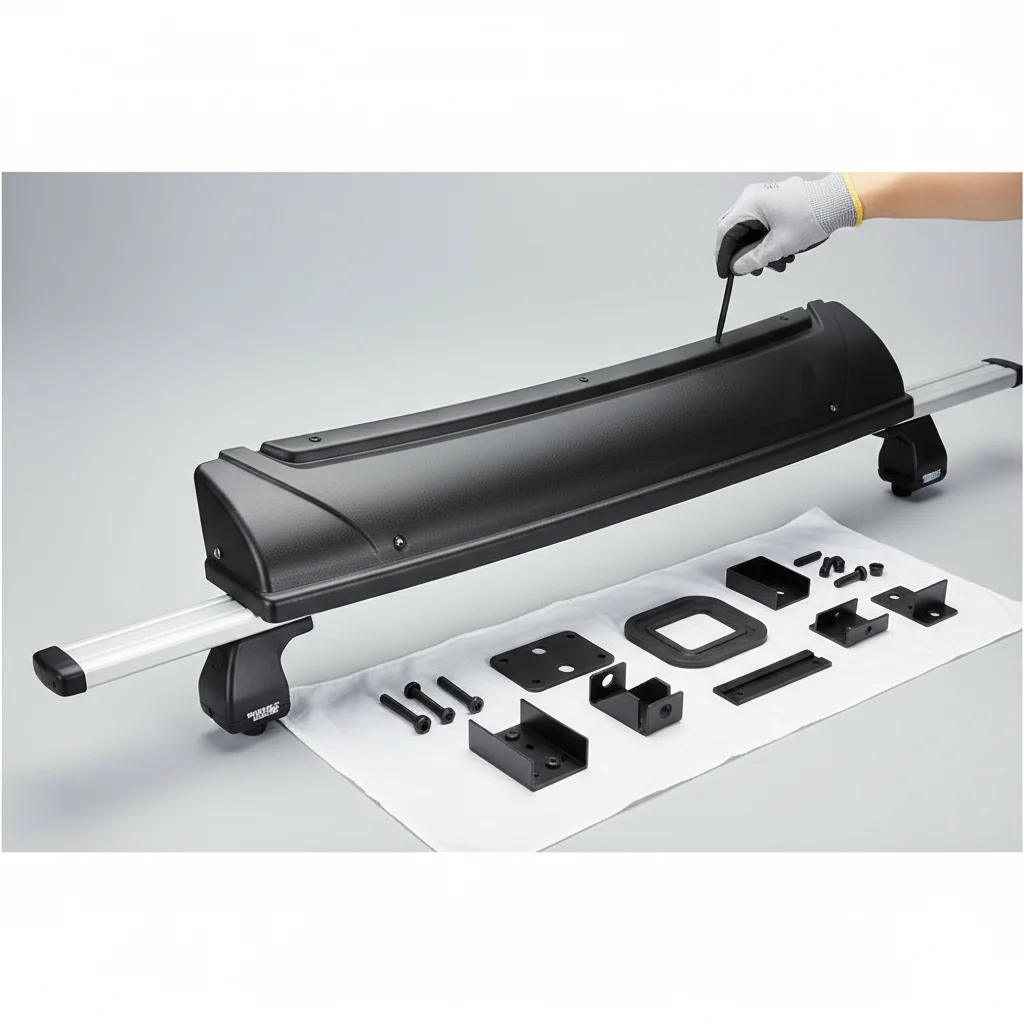
Installing a roof rack fairing can significantly reduce wind noise and drag, making your drives more enjoyable and fuel-efficient. This DIY guide will walk you through the five essential steps to properly install a fairing on your vehicle’s roof rack system, ensuring a secure fit and optimal performance.
Gathering Your Tools and Materials
Before you begin, ensure you have all the necessary tools and materials. You’ll typically need the fairing itself, the mounting hardware provided by the manufacturer (usually clamps or straps), a tape measure, a marker, and a Phillips head screwdriver or an Allen wrench, depending on your fairing’s hardware. Some installations might also benefit from a rubber mallet for gentle adjustments. Always refer to your specific fairing’s instruction manual for a precise list.
Positioning the Fairing on Your Roof Rack
The correct positioning of your fairing is crucial for its effectiveness. Generally, the fairing should be mounted as far forward on your front crossbar as possible without obstructing your sunroof or windshield wipers. Measure the distance from the front edge of your crossbar to the fairing’s mounting points to ensure a centered and even placement. A common recommendation is to have the fairing sit just above the windshield, creating a smooth airflow transition over your vehicle’s roof.
Securing the Mounting Hardware
|
Our Picks for the Best Roof Rack in 2026
As an Amazon Associate I earn from qualifying purchases.
|
||
| Num | Product | Action |
|---|---|---|
| 1 | MeeFar Roof Rack Carrier Basket Universal Rooftop 51" X 36" X 5" + Waterproof Bag 15 Cubic Feet (44" 34" 17"), and Cargo Net with Attachment Hooks, Ratchet Straps |

|
| 2 | GarveeLife 51 in x 36 in Universal Roof Rack Carrier Basket, 200 LBS Capacity Rooftop Cargo Rack, Car Top Luggage Holder Basket Heavy Duty for SUVs, Trucks, Vehicles |
|
| 3 | MaxxHaul Steel Roof Rack Cargo Basket, 46" x 36" x 4.5" Roof Top Carrier, Universal Fit for Cars, SUVs, Vans, and RVs, 150 lb Capacity, Weather-Resistant Easy-Install Cargo Storage (70115) |
|
| 4 | munirater Universal 43.3 inch Black Roof Rack Cross Bar Top Luggage Aluminum Carrier Adjustable Window Frame 2Pcs |
|
| 5 | 64 x 39 x 6 Inch Roof Rack Basket, Heavy Duty 300LB Car Roof Rack Universal Cargo Carrier Rooftop Cargo Basket Steel Luggage Holder for SUV, Truck & Pickup |
|
| 6 | MAXXHAUL 50506 64" x 39" x 6" Heavy-Duty Universal Steel Roof Rack , Black |
|
| 7 | Auto Dynasty Roof Rack Cross Bars Compatible with 2014-2018 Acura MDX, 165lbs Rooftop Cargo Bars Aluminum Anti-Corrosion Bolt-On Roof Rails for Luggage Bike Kayak Racks |
|
| 8 | GarveeLife 46" x 36" Universal Roof Rack Cargo Carrier Basket, 200 Lbs Capacity Rooftop Cargo Rack, Car Top Luggage Holder Basket Heavy Duty for SUVs, Trucks, Vehicles |
|
| 9 | GarveeLife 51 in x 36 in Universal Roof Rack Basket, 200 LBS Capacity Rooftop Cargo Carrier Basket, Heavy Duty Luggage Holder Rack for SUVs, Trucks, Vehicles |
|
| 10 | KitsPro 260lb Roof Rack Cross Bars for 2011-2021 Jeep Grand Cherokee (ONLY FIT Factory Grooved Side Rails), Matte Black Heavy Duty Aluminum Cargo Crossbar |
|
Once the fairing is in the desired position, it’s time to secure the mounting hardware. Most fairings use clamps or straps that wrap around the crossbar. Loosely attach all the clamps or straps first, ensuring they are aligned with the fairing’s pre-drilled holes. Do not overtighten at this stage, as you may need to make minor adjustments. Double-check that the fairing is level and centered before proceeding to the final tightening phase.
Adjusting for Optimal Performance and Aesthetics
With the hardware loosely attached, take a moment to fine-tune the fairing’s position. Look at it from different angles to ensure it’s straight and aesthetically pleasing. More importantly, consider its functional placement. The goal is to create a smooth, aerodynamic profile. Some fairings allow for slight angle adjustments; experiment to find the sweet spot that minimizes wind noise. Once satisfied, progressively tighten all the mounting hardware, working from one side to the other, ensuring even pressure. Avoid over-tightening, which can damage your crossbars or the fairing itself.
Final Checks and Maintenance Tips
After installation, give all the mounting points a firm tug to confirm they are secure. Take your vehicle for a short test drive, paying attention to any new noises or vibrations. If you hear whistling or excessive wind noise, the fairing might need slight repositioning or further tightening. Regularly inspect your fairing’s mounting hardware, especially after long trips or exposure to harsh weather, to ensure everything remains tight and secure. Cleaning your fairing with mild soap and water will also help maintain its appearance and longevity.
- Ensure all mounting hardware is securely tightened.
- Check for any obstructions to sunroof or wipers.
- Test drive to confirm noise reduction.
- Regularly inspect for loose components.
- Clean the fairing with non-abrasive cleaners.

Finally got around to installing my Yakima fairing and this guide was a lifesaver. The part about ensuring a secure fit and optimal performance really resonated, and I took my time with each step. The difference in wind noise is incredible, especially on longer trips. My fuel efficiency seems a little better too, which is a nice bonus.
This DIY guide was pretty solid. I appreciated the reminder to gather all the tools beforehand, especially the specific mention of a Phillips head screwdriver or Allen wrench. My only minor complaint is that my fairing’s clamps were a bit finicky, which wasn’t really covered, but I eventually got it secure. Still, it significantly reduced the drag on my crossbars.
The guide was mostly clear, but I found the section on gentle adjustments with a rubber mallet a bit vague for my specific fairing. It took me a while to figure out the best way to get it perfectly aligned without damaging anything. It did help with the wind noise, but the installation wasn’t as smooth as I hoped. Maybe a video would help for some of the trickier parts.
I followed this guide for my Thule fairing and it was super helpful. The step-by-step instructions for positioning the fairing made a huge difference in getting it just right. I used to get so much wind noise on the highway, but now it’s much quieter. Definitely recommend taking the time to do it yourself with these tips.