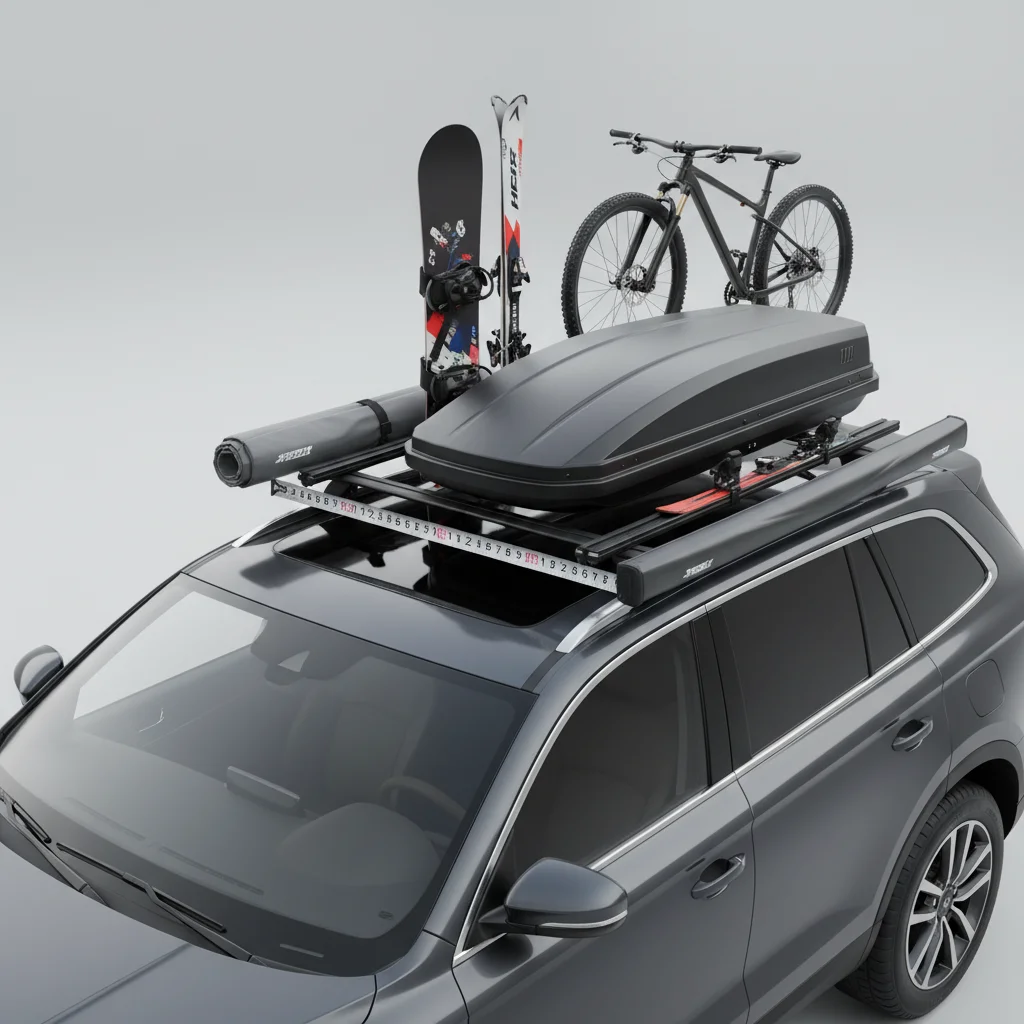
The optimal roof rack crossbar spacing for most vehicles and cargo types is between 28 and 32 inches. This range provides a stable platform for various loads, from kayaks to cargo boxes, ensuring even weight distribution and minimizing flex. However, the ideal spacing can vary slightly depending on your specific vehicle’s roof length, the type of roof rack system, and the dimensions of the items you intend to transport.
Understanding Crossbar Spacing Fundamentals
Crossbar spacing is a critical factor in the stability and safety of your roof rack system. Too narrow a spacing can lead to instability for longer items, while too wide a spacing might not provide adequate support for shorter or heavier loads. The goal is to create a balanced foundation that can securely hold your gear without putting undue stress on your vehicle’s roof or the rack components. Always consult your roof rack manufacturer’s guidelines, as they often provide specific recommendations for optimal performance and safety.
Factors Influencing Ideal Spacing
Several elements dictate the best crossbar spacing. The length of your vehicle’s roof is a primary consideration; longer roofs can accommodate wider spacing, offering more versatility. The type of cargo you plan to carry also plays a significant role. For instance, a long surfboard or kayak will benefit from a wider spread to prevent bowing, whereas a compact cargo box might be more stable with a slightly narrower gap. Additionally, the design of your specific roof rack system, whether it’s a fixed-point, flush rail, or raised rail setup, will influence the available adjustment range.
- Vehicle roof length and design
- Type and dimensions of cargo
- Manufacturer’s recommendations
- Rack system type (e.g., fixed point, raised rail)
- Weight distribution requirements
Measuring and Adjusting Your Crossbars
|
Our Picks for the Best Roof Rack in 2026
As an Amazon Associate I earn from qualifying purchases.
|
||
| Num | Product | Action |
|---|---|---|
| 1 | munirater Universal 43.3 inch Black Roof Rack Cross Bar Top Luggage Aluminum Carrier Adjustable Window Frame 2Pcs |

|
| 2 | 64 x 39 x 6 Inch Roof Rack Basket, Heavy Duty 300LB Car Roof Rack Universal Cargo Carrier Rooftop Cargo Basket Steel Luggage Holder for SUV, Truck & Pickup |
|
| 3 | KitsPro 260lb Roof Rack Cross Bars for 2011-2021 Jeep Grand Cherokee (ONLY FIT Factory Grooved Side Rails), Matte Black Heavy Duty Aluminum Cargo Crossbar |
|
| 4 | MaxxHaul Steel Roof Rack Cargo Basket, 46" x 36" x 4.5" Roof Top Carrier, Universal Fit for Cars, SUVs, Vans, and RVs, 150 lb Capacity, Weather-Resistant Easy-Install Cargo Storage (70115) |
|
| 5 | GarveeLife 46" x 36" Universal Roof Rack Cargo Carrier Basket, 200 Lbs Capacity Rooftop Cargo Rack, Car Top Luggage Holder Basket Heavy Duty for SUVs, Trucks, Vehicles |
|
| 6 | MAXXHAUL 50506 64" x 39" x 6" Heavy-Duty Universal Steel Roof Rack , Black |
|
| 7 | GarveeLife 51 in x 36 in Universal Roof Rack Basket, 200 LBS Capacity Rooftop Cargo Carrier Basket, Heavy Duty Luggage Holder Rack for SUVs, Trucks, Vehicles |
|
| 8 | GarveeLife 51 in x 36 in Universal Roof Rack Carrier Basket, 200 LBS Capacity Rooftop Cargo Rack, Car Top Luggage Holder Basket Heavy Duty for SUVs, Trucks, Vehicles |
|
| 9 | MeeFar Roof Rack Carrier Basket Universal Rooftop 51" X 36" X 5" + Waterproof Bag 15 Cubic Feet (44" 34" 17"), and Cargo Net with Attachment Hooks, Ratchet Straps |
|
| 10 | Auto Dynasty Roof Rack Cross Bars Compatible with 2014-2018 Acura MDX, 165lbs Rooftop Cargo Bars Aluminum Anti-Corrosion Bolt-On Roof Rails for Luggage Bike Kayak Racks |
|
To accurately measure your crossbar spacing, use a tape measure from the center of the front crossbar to the center of the rear crossbar. Most modern roof rack systems offer adjustable crossbars, allowing you to fine-tune the spacing. For optimal performance, ensure both crossbars are parallel to each other and perpendicular to the vehicle’s centerline. This alignment is crucial for reducing wind noise and drag, as well as for maintaining the structural integrity of your load. Always double-check all fasteners after making adjustments to ensure they are securely tightened.
Common Spacing Scenarios for Different Cargo
For large, rigid items like canoes or long ladders, a wider spacing of 30-36 inches is often preferred to distribute the load over a greater area and prevent sagging. Conversely, for smaller, more compact items such as bike carriers or ski racks, a spacing of 24-28 inches might be sufficient, aligning with the mounting points of these accessories. Cargo boxes typically have specific mounting requirements, so always refer to the box’s manual for the recommended crossbar distance. Improper spacing can lead to cargo shifting, increased wind resistance, and potential damage to both your gear and your vehicle.
When considering a new roof rack system or accessories, it’s wise to think about the primary types of cargo you’ll be transporting. This foresight will help you select a system that offers the necessary adjustability and load capacity. For versatile use, look for systems that allow for easy and secure crossbar repositioning.This flexibility ensures you can adapt your setup for various adventures, from weekend camping trips to cross-country road trips. Investing in a high-quality, adaptable system will save you time and effort in the long run, providing peace of mind that your gear is secure.
Regularly inspecting your crossbar spacing and the security of your attachments is a simple yet vital maintenance step. Before each trip, especially with heavy or bulky loads, take a few moments to confirm that your crossbars are still at the optimal distance and that all mounting hardware is tight. Over time, vibrations and road conditions can cause minor shifts, so a quick check can prevent potential issues.Proper maintenance not only extends the life of your roof rack but also significantly enhances the safety of your travels, protecting your cargo and other road users.
