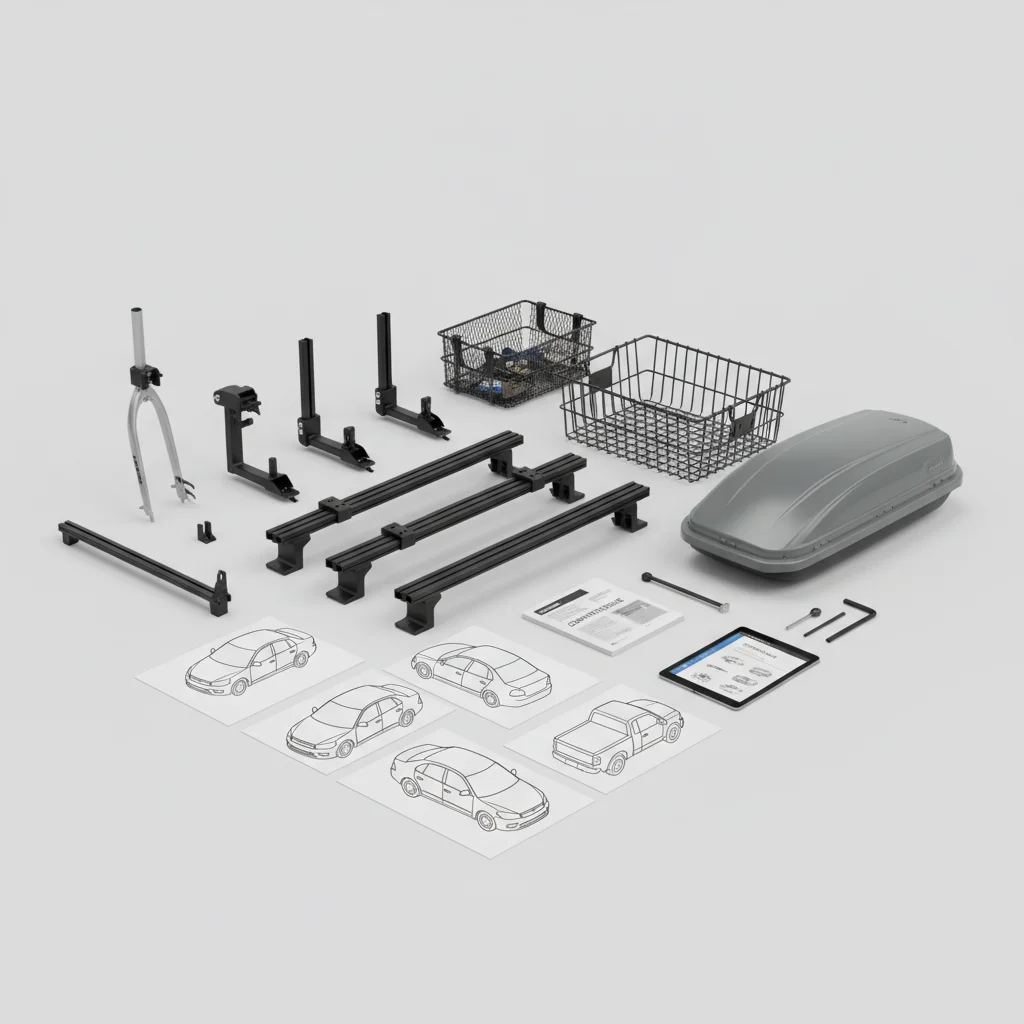
Determining roof rack compatibility for your specific vehicle involves understanding three key factors: your vehicle’s roof type, the rack system’s mounting mechanism, and the overall dimensions. Most vehicles fall into one of five main roof types: bare roofs, raised side rails, flush side rails, fixed points, or T-slots. Each type requires a specific adapter or foot pack to ensure a secure and safe fit, preventing damage to both your vehicle and the cargo.
Understanding Different Vehicle Roof Types
The first step in assessing compatibility is identifying your vehicle’s roof type. Bare roofs, common on older sedans or some entry-level models, require a clamp-on system that grips the door frame. Raised side rails, often found on SUVs and wagons, allow for towers to clamp directly onto the rails. Flush side rails, a sleeker design, need specific foot packs that integrate with the rail’s profile. Fixed points are pre-threaded attachment points hidden under small covers, while T-slots are integrated channels found on some factory or aftermarket crossbars. For automotive roof buying guides on this site.
Incorrectly identifying your roof type can lead to an unstable installation, potential damage to your vehicle’s paint or structure, and even the loss of your cargo during transit. Always consult your vehicle’s owner’s manual or a reputable roof rack manufacturer’s fit guide to confirm your exact roof configuration.
Key Components of a Compatible Roof Rack System
A complete roof rack system typically consists of four main components: foot packs, fit kits, crossbars, and sometimes locks. The foot packs are the base units that attach to your vehicle’s roof. The fit kit, often sold separately, contains custom-molded pads and clamps designed specifically for your vehicle’s make, model, and year. Crossbars, which span across the roof, provide the platform for mounting accessories like bike carriers or cargo boxes. Finally, locks offer security for your investment.
- Foot Packs: The foundational component that connects to your vehicle’s roof.
- Fit Kits: Vehicle-specific components ensuring a precise and secure attachment.
- Crossbars: The horizontal bars that support your cargo and accessories.
- Locks: Optional but recommended for securing the rack system to your vehicle.
Each of these components must be compatible with each other and, most importantly, with your vehicle. Many manufacturers offer online fit guides where you can input your vehicle’s details to find the exact parts you need.
Measuring for Optimal Crossbar Length and Clearance
|
Our Picks for the Best Roof Rack in 2026
As an Amazon Associate I earn from qualifying purchases.
|
||
| Num | Product | Action |
|---|---|---|
| 1 | MAXXHAUL 50506 64" x 39" x 6" Heavy-Duty Universal Steel Roof Rack , Black |

|
| 2 | GarveeLife 46" x 36" Universal Roof Rack Cargo Carrier Basket, 200 Lbs Capacity Rooftop Cargo Rack, Car Top Luggage Holder Basket Heavy Duty for SUVs, Trucks, Vehicles |
|
| 3 | MaxxHaul Steel Roof Rack Cargo Basket, 46" x 36" x 4.5" Roof Top Carrier, Universal Fit for Cars, SUVs, Vans, and RVs, 150 lb Capacity, Weather-Resistant Easy-Install Cargo Storage (70115) |
|
| 4 | 64 x 39 x 6 Inch Roof Rack Basket, Heavy Duty 300LB Car Roof Rack Universal Cargo Carrier Rooftop Cargo Basket Steel Luggage Holder for SUV, Truck & Pickup |
|
| 5 | GarveeLife 51 in x 36 in Universal Roof Rack Basket, 200 LBS Capacity Rooftop Cargo Carrier Basket, Heavy Duty Luggage Holder Rack for SUVs, Trucks, Vehicles |
|
| 6 | Auto Dynasty Roof Rack Cross Bars Compatible with 2014-2018 Acura MDX, 165lbs Rooftop Cargo Bars Aluminum Anti-Corrosion Bolt-On Roof Rails for Luggage Bike Kayak Racks |
|
| 7 | munirater Universal 43.3 inch Black Roof Rack Cross Bar Top Luggage Aluminum Carrier Adjustable Window Frame 2Pcs |
|
| 8 | GarveeLife 51 in x 36 in Universal Roof Rack Carrier Basket, 200 LBS Capacity Rooftop Cargo Rack, Car Top Luggage Holder Basket Heavy Duty for SUVs, Trucks, Vehicles |
|
| 9 | KitsPro 260lb Roof Rack Cross Bars for 2011-2021 Jeep Grand Cherokee (ONLY FIT Factory Grooved Side Rails), Matte Black Heavy Duty Aluminum Cargo Crossbar |
|
| 10 | MeeFar Roof Rack Carrier Basket Universal Rooftop 51" X 36" X 5" + Waterproof Bag 15 Cubic Feet (44" 34" 17"), and Cargo Net with Attachment Hooks, Ratchet Straps |
|
Once you’ve determined the correct foot pack and fit kit for your roof type, selecting the appropriate crossbar length is crucial. Crossbars should extend slightly beyond the foot packs to provide ample space for mounting accessories, but not so far that they create excessive drag or interfere with vehicle aesthetics. Most manufacturers provide recommended crossbar lengths based on your vehicle’s width.
Additionally, consider the clearance between the crossbars and your vehicle’s roof. This is particularly important if you plan to carry tall items or if your vehicle has a sunroof. Adequate clearance prevents accessories from scratching the roof and allows for proper operation of the sunroof. Always check the maximum recommended load height for your specific vehicle and rack system.
Ensuring Load Capacity and Safety Standards
Beyond physical fit, it’s vital to consider the load capacity of both your vehicle’s roof and the roof rack system itself. Your vehicle’s owner’s manual will specify the maximum dynamic load capacity for the roof, which is the weight it can safely carry while the vehicle is in motion. The roof rack system will also have its own maximum load capacity. Always adhere to the lower of these two ratings to prevent structural damage or unsafe driving conditions.
Reputable roof rack manufacturers design their systems to meet stringent safety standards. Look for products that have undergone rigorous testing and certifications. Proper installation, following the manufacturer’s instructions precisely, is equally important for ensuring the safety and stability of your cargo.
Common Compatibility Challenges and Solutions
Some common compatibility challenges include vehicles with panoramic sunroofs, which may limit the types of foot packs that can be used, or vehicles with integrated roof rails that require specialized mounting solutions. Aftermarket accessories, such as certain types of roof tents or large cargo boxes, might also have specific clearance or crossbar spacing requirements that need to be factored in.
If you encounter compatibility issues, don’t hesitate to contact the roof rack manufacturer’s customer support or visit a specialized retailer. They can often provide expert advice and suggest alternative solutions or custom fit kits that might not be immediately apparent through online tools. Always prioritize safety and a secure fit over cost or convenience when selecting a roof rack system.
