The Yakima CoreBar Aerodynamic Roof Rack is a robust and remarkably quiet choice for expanding a vehicle’s carrying capacity, engineered to enhance travels without adding distracting wind noise. It features roll-formed galvanized steel construction for exceptional durability and a “JetFlow” teardrop shape that significantly reduces wind noise and drag. This roof rack is an ideal solution for adventurers and families needing to transport oversized gear like kayaks, bikes, or skis, freeing up interior space for a more comfortable journey.
Why You Need a Roof Rack
A roof rack significantly increases your vehicle’s cargo capacity, making it an indispensable accessory for various needs. It allows you to free up precious interior space, ensuring a more comfortable journey for passengers. For those long-distance trips or weekend getaways, a roof rack means you can comfortably bring along all your oversized gear that wouldn’t fit inside, from camping equipment to lumber for home projects. The convenience of safely securing bulky items on your roof unlocks new possibilities for outdoor activities and everyday hauling.
The Yakima CoreBar Aerodynamic Roof Rack: Features and Benefits
The Yakima CoreBar Aerodynamic Roof Rack is a testament to blending robust construction with thoughtful design. Its core strength comes from roll-formed galvanized steel, ensuring exceptional durability and the ability to handle substantial loads. Unlike traditional round or square bars that often generate considerable wind noise, the CoreBar features Yakima’s innovative “JetFlow” teardrop shape. This aerodynamic profile is wind-tunnel tested to dramatically reduce drag, leading to a quieter ride and potentially improved fuel efficiency on highways. For automotive roof buying guides on this site.
Each CoreBar is also vinyl-wrapped, providing an additional layer of protection against corrosion and wear, which is crucial for longevity in diverse weather conditions. This combination of strength, quiet operation, and weather resistance makes the CoreBar an excellent foundation for any rooftop adventure. It’s compatible with Yakima’s StreamLine System Towers, which are designed to integrate seamlessly with various vehicle roof types, ensuring a secure and custom fit. Available in multiple lengths—50″, 60″, 70″, and 80″—the CoreBar can be tailored to fit a wide range of vehicles, from compact cars to SUVs.
“The Yakima CoreBar effectively addresses the common complaint of wind noise in roof racks, offering a significantly quieter experience without compromising on the heavy-duty strength of steel.”
Key Features at a Glance:
- Material: Roll-formed galvanized steel, vinyl-wrapped for durability and corrosion resistance.
- Aerodynamics: JetFlow™ teardrop shape reduces wind noise and drag.
- Load Capacity: A pair of 50-inch CoreBars can support a dynamic load of up to 220 lbs, though specific vehicle limits should always be checked.
- Compatibility: Designed to work with Yakima StreamLine System Towers (Baseline, TimberLine, RidgeLine, SkyLine, or SightLine).
- Available Lengths: 50″, 60″, 70″, 80″.
- Aesthetics: Sleek black finish.
 Yakima CoreBar Aerodynamic Roof Rack on a car, showcasing its sleek design and utility
Yakima CoreBar vs. Other Roof Rack Types
When considering a roof rack, understanding the differences between types and brands is crucial for making an informed decision. The Yakima CoreBar presents a unique blend, often positioned against traditional bar styles and more premium aerodynamic options like those from Thule or Yakima’s own JetStream bars.
Traditional vs. Aerodynamic Bars
|
Our Picks for the Best Roof Rack in 2026
As an Amazon Associate I earn from qualifying purchases.
|
||
| Num | Product | Action |
|---|---|---|
| 1 | MeeFar Roof Rack Carrier Basket Universal Rooftop 51" X 36" X 5" + Waterproof Bag 15 Cubic Feet (44" 34" 17"), and Cargo Net with Attachment Hooks, Ratchet Straps |

|
| 2 | KitsPro 260lb Roof Rack Cross Bars for 2011-2021 Jeep Grand Cherokee (ONLY FIT Factory Grooved Side Rails), Matte Black Heavy Duty Aluminum Cargo Crossbar |
|
| 3 | 64 x 39 x 6 Inch Roof Rack Basket, Heavy Duty 300LB Car Roof Rack Universal Cargo Carrier Rooftop Cargo Basket Steel Luggage Holder for SUV, Truck & Pickup |
|
| 4 | GarveeLife 51 in x 36 in Universal Roof Rack Basket, 200 LBS Capacity Rooftop Cargo Carrier Basket, Heavy Duty Luggage Holder Rack for SUVs, Trucks, Vehicles |
|
| 5 | munirater Universal 43.3 inch Black Roof Rack Cross Bar Top Luggage Aluminum Carrier Adjustable Window Frame 2Pcs |
|
| 6 | MAXXHAUL 50506 64" x 39" x 6" Heavy-Duty Universal Steel Roof Rack , Black |
|
| 7 | MaxxHaul Steel Roof Rack Cargo Basket, 46" x 36" x 4.5" Roof Top Carrier, Universal Fit for Cars, SUVs, Vans, and RVs, 150 lb Capacity, Weather-Resistant Easy-Install Cargo Storage (70115) |
|
| 8 | GarveeLife 51 in x 36 in Universal Roof Rack Carrier Basket, 200 LBS Capacity Rooftop Cargo Rack, Car Top Luggage Holder Basket Heavy Duty for SUVs, Trucks, Vehicles |
|
| 9 | GarveeLife 46" x 36" Universal Roof Rack Cargo Carrier Basket, 200 Lbs Capacity Rooftop Cargo Rack, Car Top Luggage Holder Basket Heavy Duty for SUVs, Trucks, Vehicles |
|
| 10 | Auto Dynasty Roof Rack Cross Bars Compatible with 2014-2018 Acura MDX, 165lbs Rooftop Cargo Bars Aluminum Anti-Corrosion Bolt-On Roof Rails for Luggage Bike Kayak Racks |
|
Older, traditional round or square crossbars are known for their simplicity and cost-effectiveness but often suffer from significant wind noise and reduced fuel efficiency due to their non-aerodynamic profile. The CoreBar, with its JetFlow teardrop shape, directly tackles these issues, offering a much quieter ride.
CoreBar vs. High-End Aerodynamic Bars (e.g., Yakima JetStream, Thule WingBar Evo)
While the CoreBar provides excellent aerodynamics and steel strength, it differs from some premium options, notably in its lack of a T-slot channel. T-slots allow for tool-free attachment of certain accessories, which can be a convenience for users who frequently swap out different gear mounts. Yakima’s JetStream bars, for example, are aluminum with a T-slot, offering enhanced corrosion resistance in harsh environments and accessory flexibility. Thule’s WingBar Evo also features T-slots and is known for its high-quality aluminum construction and rust-proof materials.
Here’s a quick comparison:
| Feature | Yakima CoreBar | Yakima JetStream | Thule WingBar Evo |
|---|---|---|---|
| Material | Roll-formed galvanized steel, vinyl-wrapped | Aluminum | Aluminum |
| Aerodynamics | Excellent (JetFlow™ teardrop shape) | Excellent (aerofoil shape) | Excellent (TrailEdge, WindDiffuser strips) |
| T-Slot Channel | No | Yes | Yes |
| Strength | High (steel) | High (aluminum) | High (aluminum, often thicker) |
| Corrosion Resist | Good (galvanized steel, vinyl-wrapped) | Excellent (aluminum) | Excellent (rust-proof aluminum) |
| Primary Use | Strong, quiet transport of consistent loads | Versatile, quiet, accessory flexibility | Premium, quiet, accessory flexibility, ease of install |
| Price Point | Mid-range, cost-effective | Higher | Premium |
The CoreBar is ideal if you prioritize robust strength, a quiet ride, and a cost-effective solution for carrying consistent loads, and you don’t require the T-slot system for your accessories. If long-term accessory flexibility, maximum corrosion resistance, and T-slot compatibility are paramount, then Yakima JetStream or Thule WingBar Evo might be more suitable, albeit at a higher price point.
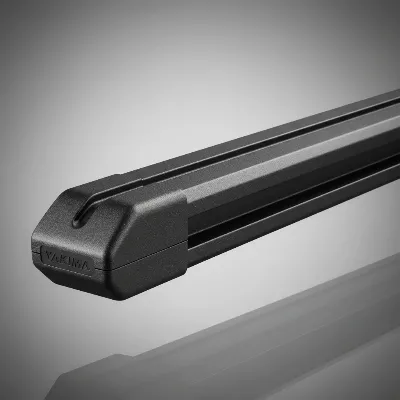 Close-up of Yakima CoreBar aerodynamic profile, showing its JetFlow design and steel construction
How to Choose the Right Roof Rack for Your Needs
Selecting the perfect roof rack, especially one as specific as the Yakima CoreBar, involves careful consideration of several factors beyond just the bars themselves.
- Assess Your Primary Needs: Determine what you plan to carry most frequently. If it’s heavy gear or items where absolute strength and quietness are key, and you don’t rely on T-slot specific accessories, the CoreBar is an excellent candidate. If you need extreme versatility with numerous T-slot accessories, you might lean towards other Yakima or Thule aero bars.
- Check Vehicle Compatibility: A roof rack system isn’t just the crossbars. You’ll need compatible towers and a fit kit designed specifically for your vehicle’s make, model, and roof type (e.g., bare roof, flush rails, raised rails, fixed points). Yakima offers a “Fit My Car” tool to ensure you get the correct components.
- Consider Load Capacity: While the CoreBar itself is strong (up to 220 lbs for a pair), always consult your vehicle’s owner’s manual for its maximum permissible roof load. Never exceed this limit, as it can be dangerous and void warranties.
- Evaluate Material and Durability: The CoreBar’s galvanized steel construction, combined with its vinyl wrap, provides excellent durability and resistance to the elements, making it a reliable choice for long-term use.
- Prioritize Aerodynamics and Noise: If a quiet ride is a major concern, the CoreBar’s JetFlow design is specifically engineered to minimize wind noise and drag, a significant upgrade from older, non-aerodynamic bars.
Popular Roof Rack Brands
While this review focuses on the Yakima CoreBar, it’s worth noting the brand’s position among other leading manufacturers. Yakima, an American company, is a long-standing innovator in the outdoor gear and vehicle accessory market, known for its robust and user-friendly products.
- Yakima: With a history dating back to 1979, Yakima is renowned for its diverse range of roof rack systems, bike racks, cargo solutions, and water sports carriers. The CoreBar exemplifies their commitment to combining strength with aerodynamic efficiency.
- Thule: A Swedish brand, Thule is another industry leader, often recognized for its sleek designs, high-quality materials (especially aluminum), and rigorous European testing standards. Thule offers a wide array of products, from roof racks to cargo boxes.
- Rhino-Rack: Hailing from Australia, Rhino-Rack specializes in tough, versatile roof rack solutions, particularly popular among overlanders and those requiring heavy-duty carrying capacities for challenging conditions.
Installation Guide for the Yakima CoreBar (General Overview)
Installing the Yakima CoreBar Aerodynamic Roof Rack involves a few key steps that, while detailed, are generally straightforward with the right tools and instructions. It’s important to remember that the CoreBars themselves are only part of the system; you’ll need compatible Yakima towers and a vehicle-specific fit kit.
- Preparation: Begin by thoroughly cleaning your vehicle’s roof where the rack will sit. Gather your tools, typically including a hex wrench (often provided) and a tape measure.
- Attach Adapters to Bars: The first step is usually to attach the specific bar adapters to the CoreBars. These fit into the end of the bars, providing the interface for the towers. Ensure they are correctly oriented and secured with a few turns of the fastening tool.
- Assemble Towers and Fit Kit: Connect the appropriate Yakima towers to your vehicle-specific fit kit (which includes rubber pads and clamps/clips). The rubber pads are crucial for protecting your vehicle’s paint and providing grip.
- Attach Towers to Bars: Slide the assembled towers onto the CoreBars, ensuring the aerodynamic shape of the tower aligns with the bar. You’ll need to measure the proper spacing (crossbar spread) as indicated in your vehicle’s fit guide. Many Yakima systems have an arrow on the bar to indicate the center, aiding in accurate placement.
- Initial Placement on Vehicle: Carefully place the entire assembly onto your vehicle’s roof, making sure the rubber pads are correctly seated.
- Adjust and Tighten: Adjust the tower’s “pitch and toe” as needed to match the contour of your roof. Then, tighten the tower clamps, often using a specialized tool that clicks when the correct torque is reached, preventing overtightening. This ensures a secure fit without damaging your vehicle.
- Install End Caps: Once everything is tightened, install the end caps onto the towers. Some towers also offer the option to install SKS (Same Key System) lock cores for added security.
Always refer to the detailed instructions provided with your specific Yakima CoreBar, towers, and fit kit, as installation can vary slightly by vehicle and component.
Important Usage Notes When Using Your Roof Rack
To ensure safety, prolong the life of your Yakima CoreBar Aerodynamic Roof Rack, and protect your vehicle, it’s vital to follow certain usage guidelines.
- Do Not Overload: Never exceed the stated maximum load capacity of your roof rack system or, more importantly, your vehicle’s roof. Overloading can lead to dangerous instability, damage to your vehicle, and potential accidents.
- Distribute Weight Evenly: When loading gear, distribute the weight as evenly as possible across the crossbars. Avoid concentrating heavy items on one side, which can affect vehicle handling and rack stability.
- Secure Cargo Properly: Use appropriate tie-downs, straps, or specialized carriers (e.g., bike racks, kayak cradles, cargo baskets) to firmly secure all items. Check frequently during your journey, especially at the start and after driving for a short while, to ensure nothing has shifted or loosened.
- Perform Regular Checks: Periodically inspect your roof rack system, including the bars, towers, fit kit, and mounting points. Look for any signs of wear, looseness, or damage. Tighten fasteners as needed.
- Adjust Driving Style: Be mindful that adding a roof rack, especially when loaded, changes your vehicle’s aerodynamics and center of gravity. Drive more cautiously, especially at high speeds, in crosswinds, or when cornering. Remember that your vehicle’s overall height will increase, so be aware of low clearances, like in garages or drive-thrus.
- Check Clearance: Before entering any enclosed spaces, always double-check the total height of your vehicle with the roof rack and any loaded cargo.
Frequently Asked Questions
What makes the Yakima CoreBar “aerodynamic”?
The Yakima CoreBar features a unique “JetFlow” teardrop cross-section, specifically engineered and wind-tunnel tested to cut through the air more efficiently. This design significantly reduces wind noise and drag compared to traditional round or square crossbars, contributing to a quieter ride and potentially better fuel economy.
Can I install Yakima CoreBars myself?
Yes, the Yakima CoreBar system is designed for DIY installation. While it requires compatible Yakima towers and a vehicle-specific fit kit, the process typically involves attaching adapters, assembling the towers, measuring for correct spacing, and tightening components with a provided tool. Detailed instructions are always included and should be followed carefully.
Is the CoreBar compatible with all Yakima accessories?
The CoreBar is compatible with a wide range of Yakima accessories that clamp around the bar. However, it does not feature a T-slot channel, which means accessories designed specifically for T-slot mounting (like some premium bike or ski carriers) may not be directly compatible without adapters. It’s always best to check accessory compatibility before purchase.
What is the weight capacity of the Yakima CoreBar?
A pair of 50-inch Yakima CoreBars has a maximum dynamic load rating of 220 lbs. It is critical to remember that this capacity is for the bars themselves, and you must always adhere to the maximum roof load capacity specified in your vehicle’s owner’s manual, which may be lower.
How does the CoreBar compare to Yakima’s JetStream bars?
The Yakima CoreBar is made of galvanized steel and lacks a T-slot, offering exceptional strength and quiet aerodynamics at a cost-effective price. The Yakima JetStream bars are made of aluminum and include a T-slot, providing similar aerodynamics, enhanced corrosion resistance (especially in saltwater environments), and greater flexibility for T-slot specific accessories. The choice depends on prioritizing strength/cost (CoreBar) versus T-slot versatility/ultimate corrosion resistance (JetStream).
Will the CoreBar affect my vehicle’s fuel economy?
The CoreBar’s aerodynamic JetFlow design is specifically engineered to reduce drag, which can help maintain your vehicle’s fuel efficiency compared to less aerodynamic roof rack options. While any item on your roof can slightly impact fuel economy, the CoreBar is designed to minimize this effect.
Conclusion
The Yakima CoreBar Aerodynamic Roof Rack offers a compelling solution for anyone seeking to expand their vehicle’s carrying capabilities without succumbing to the common drawbacks of traditional roof racks. Its robust galvanized steel construction ensures durability and high load capacity, while the innovative JetFlow aerodynamic design delivers a remarkably quiet ride, even at highway speeds. By reducing wind noise and drag, the CoreBar allows you to focus on the journey and the destination, not the distraction overhead.
Choosing the right roof rack is an investment in your adventures, providing the freedom to transport more gear and explore further. The CoreBar stands as an excellent, cost-effective option for those prioritizing strength, quiet performance, and reliability. Ready to transform your vehicle into an adventure-ready machine? Discover how the Yakima CoreBar can enhance your next outdoor excursion. What are your biggest considerations when choosing a roof rack for your next adventure?

I got the Yakima CoreBar specifically for ski season, and it definitely frees up interior space, which is great. It holds the skis securely, and I appreciate the robust build. However, I did notice a slight hum at certain speeds, not super loud, but it’s there. It’s not as ‘remarkably quiet’ as I hoped, but still a solid rack overall.
We needed a reliable way to transport our camping gear without cramming the car, and the CoreBar has been perfect. The increased cargo capacity is exactly what we needed. It feels incredibly secure, even with a fully loaded cargo box. Definitely recommend it for anyone who needs more space for their gear.
I finally pulled the trigger on the Yakima CoreBar after reading about its ‘JetFlow’ teardrop shape, and I’m so glad I did. The wind noise is practically nonexistent, even at highway speeds. It’s made such a difference on our family road trips, especially when we’re hauling our bikes. Installation was pretty straightforward too, which was a bonus.
This roof rack is a game-changer for our kayaking adventures. We used to struggle with fitting everything inside, but now we just strap the kayaks right on top. The galvanized steel construction feels super solid and durable, like it’ll last for years. My only minor complaint is that it took a little longer to get perfectly level than I expected.