A persistent, high-pitched whistle from your roof rack can be eliminated quickly at home by identifying and addressing common aerodynamic issues. Most whistling stems from open slots in crossbars, loose components, or the shape and position of the rack. Simple DIY fixes like sealing gaps with rubber strips, tightening bolts, or installing a wind fairing can restore quiet to your vehicle’s cabin, often without needing professional help.
Understanding the Whistle: Common Causes of Roof Rack Noise
That irritating whistle is often a tell-tale sign of airflow disruption. When wind hits your roof rack, especially at higher speeds, it can create turbulence and vibrations, resulting in various noises like humming, buzzing, or a sharp whistle. The primary culprits behind this unwelcome symphony are usually related to aerodynamics, loose components, or unsealed gaps.
One of the most frequent causes is open slots or channels within the crossbars or mounting feet. These unsealed openings act like a flute, allowing air to pass through and generate a distinct whistling sound. Furthermore, the shape of your crossbars plays a significant role; older, square-profile bars are inherently less aerodynamic than modern elliptical or teardrop designs, making them more prone to noise. Loose parts—be it bolts, end caps, or even poorly secured cargo straps—can also contribute significantly to noise by vibrating or flapping in the wind. Lastly, the position of your crossbars can influence airflow, with some placements inadvertently creating more turbulence near the windshield. Identifying the exact source is the first crucial step toward a quiet ride.
How to Identify the Source of Your Roof Rack Whistle
Pinpointing the exact origin of the whistle is key to a quick and effective fix. The sound typically becomes more noticeable at speeds between 30 and 70 mph and may change pitch with acceleration or crosswinds.
Start by performing a thorough visual inspection of your entire roof rack system. Look for any obvious gaps, especially in the underside slots or accessory channels of your crossbars, or around the mounting feet. Check all rubber seals, including end caps, top and bottom rubber strips, and plastic slide strips, ensuring they are fully seated and free of damage. Next, test the tightness of every bolt, screw, and clamping mechanism. Loose components are notorious for generating rattles and amplifying wind noise. Finally, if you’re carrying any gear, confirm that all straps are taut and that the load is securely fastened, preventing any flapping or vibration against the rack. If the noise persists, try adjusting the position of your front crossbar slightly forward or backward if your vehicle allows, as this can sometimes alter the airflow just enough to eliminate the whistle.
Quick and Effective DIY Fixes for a Noisy Roof Rack
Once you’ve identified the potential source of the whistle, several quick and easy DIY solutions can bring back the tranquility of your drive. These fixes focus on improving aerodynamics and securing loose elements, often using materials you might already have at home.
The most common solution for open channels is to seal them off. Many roof racks come with rubber or plastic strips designed to fill these gaps. Ensure all of these are correctly installed. If missing or damaged, you can improvise by using foam tape, rubber weatherstripping, or even wrapping a bungee cord or paracord tightly around the length of the crossbars. This simple act disrupts the airflow, preventing the creation of noisy vortices. Another highly effective remedy is the installation of a wind fairing. These aerodynamic shields attach to the front crossbar, redirecting air smoothly over the entire rack system and dramatically reducing wind noise. If you already have a fairing, ensure it’s properly positioned and consider adding rubber weatherstripping along its bottom edge to create a seamless seal with your vehicle’s roof.
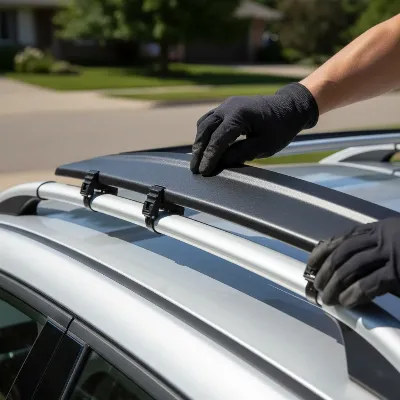 Installing a wind fairing on a car’s roof rack to reduce noise and whistling
Furthermore, tighten every bolt and screw on your roof rack. Loose connections are a primary source of vibration and noise. Regularly inspect and secure all mounting brackets, crossbar attachments, and any accessory mounts. For persistent vibrations between the rack and your vehicle’s roof, add padding using noise reduction pads, EVA foam, or rubber strips at the contact points. These materials absorb vibrations, further dampening any potential noise. Finally, if your crossbars are adjustable, experiment with moving their position. Sometimes, shifting the front crossbar just a few inches forward or backward can change the airflow enough to eliminate the whistle, especially if it’s currently in a trajectory of strong airflow coming off the windshield.
Installing and Maintaining Your Roof Rack to Prevent Noise
While these quick fixes are effective, proper installation and ongoing maintenance are your best defense against future whistling. A correctly installed roof rack should be designed to minimize noise, so understanding the manufacturer’s guidelines is crucial.
Begin by carefully reading the installation manual specific to your roof rack model and vehicle. Ensure that all components are fitted according to the instructions, paying close attention to the placement of rubber seals, end caps, and any aerodynamic inserts. Double-check that all bolts and clamps are tightened to the recommended specifications; overtightening can cause damage, while undertightening leads to movement and noise. Once installed, perform a test drive to listen for any immediate issues. Regularly inspect your roof rack for wear and tear, especially before long journeys. Look for cracked rubber seals, loose bolts, or damaged end caps, and replace or repair them promptly. Keep the rack clean, as accumulated dirt or debris can also alter airflow. If you frequently remove and reinstall your rack, take care to store all small parts and seals properly to avoid loss.
> “Proper maintenance is not just about extending the life of your roof rack; it’s also about ensuring a consistently quiet and safe driving experience. Many noise complaints stem from simple oversight.” – Dr. Alex Tran, Automotive Aerodynamics Specialist
Important Considerations When Using Your Roof Rack
Beyond installation and fixes, how you use your roof rack significantly impacts the noise level. Mindful loading and driving habits can prevent unnecessary whistling and enhance overall safety.
Firstly, never overload your roof rack. Exceeding the manufacturer’s specified weight limit not only compromises safety but also puts undue stress on the rack and vehicle, potentially exacerbating noise. When loading items, distribute weight evenly to maintain vehicle balance and prevent vibrations. Ensure all cargo, especially bulky or irregularly shaped items, is securely fastened with sturdy straps. Loose loads are a prime source of flapping sounds and can even become dislodged during travel. If carrying multiple accessories like bike racks or cargo boxes, consider their placement; often, placing larger, taller items towards the rear and lower-profile items at the front can optimize airflow. Finally, remember that driving with a roof rack, particularly at higher speeds, will inherently introduce some level of wind resistance. Adjust your driving speed accordingly. Excessive speed will amplify any existing noise and may even impact fuel efficiency.
 Car with a loaded roof rack driving on a highway, illustrating proper cargo securing
Conclusion
A whistling roof rack doesn’t have to be a permanent fixture in your driving experience. By systematically troubleshooting common issues like unsealed channels, loose components, or suboptimal positioning, you can often restore quiet to your cabin with simple, at-home solutions. From sealing gaps with rubber strips or paracord to installing a wind fairing, or simply ensuring every bolt is tightened, these DIY methods offer effective relief. Remember that proper initial installation, regular maintenance, and mindful loading practices are your best allies in preventing wind noise. A little attention to detail goes a long way in ensuring your roof rack serves its purpose without disturbing your journey. What quick fix has worked best for you to silence your roof rack?
Frequently Asked Questions
Why do roof racks whistle even when empty?
|
Our Picks for the Best Roof Rack in 2026
As an Amazon Associate I earn from qualifying purchases.
|
||
| Num | Product | Action |
|---|---|---|
| 1 | MAXXHAUL 50506 64" x 39" x 6" Heavy-Duty Universal Steel Roof Rack , Black |

|
| 2 | GarveeLife 51 in x 36 in Universal Roof Rack Carrier Basket, 200 LBS Capacity Rooftop Cargo Rack, Car Top Luggage Holder Basket Heavy Duty for SUVs, Trucks, Vehicles |
|
| 3 | munirater Universal 43.3 inch Black Roof Rack Cross Bar Top Luggage Aluminum Carrier Adjustable Window Frame 2Pcs |
|
| 4 | Auto Dynasty Roof Rack Cross Bars Compatible with 2014-2018 Acura MDX, 165lbs Rooftop Cargo Bars Aluminum Anti-Corrosion Bolt-On Roof Rails for Luggage Bike Kayak Racks |
|
| 5 | 64 x 39 x 6 Inch Roof Rack Basket, Heavy Duty 300LB Car Roof Rack Universal Cargo Carrier Rooftop Cargo Basket Steel Luggage Holder for SUV, Truck & Pickup |
|
| 6 | MaxxHaul Steel Roof Rack Cargo Basket, 46" x 36" x 4.5" Roof Top Carrier, Universal Fit for Cars, SUVs, Vans, and RVs, 150 lb Capacity, Weather-Resistant Easy-Install Cargo Storage (70115) |
|
| 7 | GarveeLife 51 in x 36 in Universal Roof Rack Basket, 200 LBS Capacity Rooftop Cargo Carrier Basket, Heavy Duty Luggage Holder Rack for SUVs, Trucks, Vehicles |
|
| 8 | MeeFar Roof Rack Carrier Basket Universal Rooftop 51" X 36" X 5" + Waterproof Bag 15 Cubic Feet (44" 34" 17"), and Cargo Net with Attachment Hooks, Ratchet Straps |
|
| 9 | GarveeLife 46" x 36" Universal Roof Rack Cargo Carrier Basket, 200 Lbs Capacity Rooftop Cargo Rack, Car Top Luggage Holder Basket Heavy Duty for SUVs, Trucks, Vehicles |
|
| 10 | KitsPro 260lb Roof Rack Cross Bars for 2011-2021 Jeep Grand Cherokee (ONLY FIT Factory Grooved Side Rails), Matte Black Heavy Duty Aluminum Cargo Crossbar |
|
Even an empty roof rack can whistle due to aerodynamic interference. Open slots, channels, or the specific profile (e.g., square bars) of the crossbars can create turbulence and vortices as air flows over them, producing a high-pitched whistling sound. Sealing these gaps and ensuring all components are tight are key to reducing this noise.
Can adjusting the position of my roof rack stop the whistle?
Yes, adjusting the position of your crossbars can often help reduce or eliminate whistling. Moving the front crossbar slightly forward or backward can change the way air interacts with the rack, altering turbulence patterns and potentially finding a “sweet spot” where noise is minimized. This is particularly effective if your vehicle has adjustable roof rails.
Are wind fairings really effective for roof rack noise?
Wind fairings are highly effective at reducing roof rack wind noise, including whistling. These aerodynamic shields attach to the front crossbar, disrupting the direct impact of air on the rack and redirecting it smoothly over the system, significantly cutting down on turbulence and the resulting sounds. They are one of the most recommended solutions.
What household items can I use to stop roof rack whistling?
Common household items like rubber weatherstripping, foam tape, or even a bungee cord can be used to seal open channels or gaps in your roof rack’s crossbars, disrupting airflow and reducing whistling. Tightly wrapping a bungee cord or paracord around the length of the crossbars can also break up the airflow effectively.
How often should I check my roof rack for noise issues?
It’s advisable to check your roof rack periodically, especially before long trips or after carrying heavy loads. Regularly inspect for loose bolts, damaged seals, and any new gaps or wear. A quick check for tightness and integrity can prevent most noise issues before they become a problem.
How to Silence a Whistling Roof Rack
Follow these steps to identify and fix the source of a whistling roof rack, restoring quiet to your vehicle's cabin.
Visually inspect your entire roof rack system for open slots, channels, or gaps in crossbars and mounting feet. Check all rubber seals and end caps for damage or improper seating. Ensure every bolt, screw, and clamping mechanism is tight, as loose components are a primary source of noise.
For open slots or channels, use rubber or plastic strips designed for your rack. If these are missing, improvise with foam tape, rubber weatherstripping, or by tightly wrapping a bungee cord or paracord along the length of the crossbars. This disrupts airflow and prevents whistling.
Attach an aerodynamic wind fairing to the front crossbar. This shield redirects air smoothly over the entire rack system, significantly reducing wind noise and whistling. Ensure the fairing is properly positioned and consider adding rubber weatherstripping along its bottom edge for a seamless seal.
Regularly tighten every bolt and screw on your roof rack, including mounting brackets and accessory mounts, to prevent vibrations. For persistent vibrations between the rack and your vehicle's roof, add noise reduction pads, EVA foam, or rubber strips at contact points to absorb sound.
If your crossbars are adjustable, experiment with moving the front crossbar a few inches forward or backward. This can alter the airflow enough to eliminate the whistle, especially if the current position creates strong turbulence near the windshield.

Seriously, the whistle from my roof rack was driving me nuts. I thought I’d have to buy a whole new system. Following the advice about checking for loose components and adjusting the position of the rack made a huge difference. It’s completely silent now, even at 70 mph. So glad I didn’t have to pay for a professional fix.
I recently installed a new cargo box and suddenly developed a high-pitched whistle. I was convinced it was the box itself. Turns out, it was just the unsealed gaps in my crossbars, exactly as described. A little bit of electrical tape in the right spots and the problem was solved. Such a simple fix for such an annoying sound!
I was getting so frustrated with the constant whistling from my Thule crossbars, especially on the highway. The tip about sealing open slots with rubber strips was a game-changer. It took me about 15 minutes to do, and now my drive is so much quieter. Wish I’d known about this sooner instead of just cranking up the radio!
My Yakima rack has been making a low hum for a while, and I was hoping one of these fixes would completely eliminate it. Tightening all the bolts definitely helped reduce the noise, but there’s still a slight hum at higher speeds. I might need to look into a wind fairing next, but it’s better than it was.