Discovering water dripping into your car’s cabin from above can be an unwelcome surprise, often signaling an issue with your roof rack. Far from being a mere aesthetic nuisance, a persistent leak can lead to significant interior damage, including mold growth, upholstery degradation, and even electrical problems. Fortunately, many roof rack leaks can be effectively addressed with a hands-on, do-it-yourself approach. This comprehensive guide will walk you through identifying the root causes of leaks, equipping you with the right tools and materials, and providing step-by-step instructions to ensure your vehicle’s interior remains dry and protected, no matter the weather.
Why Your Roof Rack Might Be Leaking Water Inside Your Car
A leaking roof rack is more than just an inconvenience; it’s a direct threat to your vehicle’s interior. Understanding the common culprits behind these leaks is the first step toward a successful DIY repair. Most frequently, the issue originates where the roof rack components interface with your car’s roof, which are critical points for maintaining a watertight seal.
Improper Installation or Loose Bolts
|
Our Picks for the Best Roof Rack in 2026
As an Amazon Associate I earn from qualifying purchases.
|
||
| Num | Product | Action |
|---|---|---|
| 1 | GarveeLife 51 in x 36 in Universal Roof Rack Carrier Basket, 200 LBS Capacity Rooftop Cargo Rack, Car Top Luggage Holder Basket Heavy Duty for SUVs, Trucks, Vehicles |

|
| 2 | MaxxHaul Steel Roof Rack Cargo Basket, 46" x 36" x 4.5" Roof Top Carrier, Universal Fit for Cars, SUVs, Vans, and RVs, 150 lb Capacity, Weather-Resistant Easy-Install Cargo Storage (70115) |
|
| 3 | GarveeLife 46" x 36" Universal Roof Rack Cargo Carrier Basket, 200 Lbs Capacity Rooftop Cargo Rack, Car Top Luggage Holder Basket Heavy Duty for SUVs, Trucks, Vehicles |
|
| 4 | MeeFar Roof Rack Carrier Basket Universal Rooftop 51" X 36" X 5" + Waterproof Bag 15 Cubic Feet (44" 34" 17"), and Cargo Net with Attachment Hooks, Ratchet Straps |
|
| 5 | Auto Dynasty Roof Rack Cross Bars Compatible with 2014-2018 Acura MDX, 165lbs Rooftop Cargo Bars Aluminum Anti-Corrosion Bolt-On Roof Rails for Luggage Bike Kayak Racks |
|
| 6 | GarveeLife 51 in x 36 in Universal Roof Rack Basket, 200 LBS Capacity Rooftop Cargo Carrier Basket, Heavy Duty Luggage Holder Rack for SUVs, Trucks, Vehicles |
|
| 7 | munirater Universal 43.3 inch Black Roof Rack Cross Bar Top Luggage Aluminum Carrier Adjustable Window Frame 2Pcs |
|
| 8 | MAXXHAUL 50506 64" x 39" x 6" Heavy-Duty Universal Steel Roof Rack , Black |
|
| 9 | 64 x 39 x 6 Inch Roof Rack Basket, Heavy Duty 300LB Car Roof Rack Universal Cargo Carrier Rooftop Cargo Basket Steel Luggage Holder for SUV, Truck & Pickup |
|
| 10 | KitsPro 260lb Roof Rack Cross Bars for 2011-2021 Jeep Grand Cherokee (ONLY FIT Factory Grooved Side Rails), Matte Black Heavy Duty Aluminum Cargo Crossbar |
|
One of the most frequent reasons for water ingress is an incorrectly fitted roof rack or bolts that have loosened over time. When the rack’s mounting bolts are not tightened to the manufacturer’s specifications, or if they were installed unevenly, it can create microscopic gaps. These small openings act as direct pathways for water, allowing rain or car wash spray to seep into the vehicle’s interior. Over time, road vibrations and changes in temperature can further exacerbate the loosening of these critical fasteners, compromising the initial seal and leading to leaks. For see our automotive roof recommendations on this site.
Degraded or Missing Sealants
Many roof rack installations rely on sealants applied to the bolts or around the mounting points to prevent water intrusion. If these original sealants are old, cracked, or simply weren’t applied correctly during the initial installation, their ability to repel water diminishes significantly. Removing and reinstalling roof rack bolts, even for routine maintenance, can strip away the factory-applied thread sealant, leaving the connection vulnerable. Without a fresh, robust sealant in place, water can easily travel along the bolt threads and into the cabin.
Damaged Gaskets or Washers
Gaskets and washers are crucial components designed to create a tight, waterproof barrier between the roof rack’s mounting feet and the vehicle’s roof. These can be made of rubber, mastic, or other pliable materials. Over years of exposure to harsh weather, UV radiation, and temperature fluctuations, these materials can degrade, crack, or become brittle. A compromised gasket or washer will fail to provide the necessary seal, allowing water to bypass the protective layer and find its way inside your car. Inspecting these components for wear and tear is vital for leak prevention.
Corrosion or Cracks Around Mounting Points
While less common, corrosion or actual cracks in the vehicle’s roof sheet metal around the roof rack mounting points can also be a source of leaks. This can occur due to long-term exposure to moisture, particularly in areas where the paint or protective coatings have been compromised. Small stress cracks, often invisible to the naked eye, can develop over time, providing a path for water. Addressing these issues might require more extensive repair than simply resealing bolts, potentially involving rust treatment and structural repair.
Essential Tools and Materials for a Leak-Free Roof Rack
Tackling a roof rack leak effectively requires the right set of tools and materials. Having these items on hand before you begin will streamline the repair process and help ensure a lasting seal. Most of these can be found at your local automotive store, hardware store, or even home improvement center.
You’ll need a set of basic hand tools for removing and reinstalling your roof rack, which typically includes wrenches or sockets that match the size of your rack’s mounting bolts. A torque wrench is highly recommended to ensure bolts are tightened to the manufacturer’s specified tension, preventing both overtightening and undertightening. For cleaning, gather some rubbing alcohol or a suitable degreaser, along with clean rags or paper towels. A rubber squeegee or plastic pry tool can be helpful for carefully removing weather stripping if necessary.
For sealing the leak, the most critical materials are a high-quality, waterproof sealant, such as a neutral cure silicone or an automotive-grade sealant. You might also consider specialized mastic washers or tape for a robust mechanical seal. If your existing gaskets are damaged, having new rubber gaskets or a sheet of gasket maker material on hand will be essential for creating new, custom seals. Finally, don’t forget personal protective equipment like gloves to keep your hands clean and protected while working with sealants.
Step-by-Step DIY Guide to Sealing a Leaky Roof Rack
Fixing a leaky roof rack might seem daunting, but by following a systematic approach, you can effectively seal the problem and protect your vehicle’s interior. This guide breaks down the process into manageable steps, ensuring you address all potential leak points.
Step 1: Identify the Leak Source
Before you can fix a leak, you need to find it. This often involves a careful inspection and water testing. Start by visually inspecting the interior headliner around the roof rack mounting points for any signs of water stains or dampness. Next, with the car parked on a level surface, carefully pour water over a small section of the roof rack, one mounting foot at a time. Have someone inside the car observe closely for any drips or signs of water entry. This targeted approach helps pinpoint the exact source of the leak, which is almost always related to the bolts connecting the rack to the roof.
Step 2: Remove the Roof Rack (If Necessary)
In most cases, a thorough repair requires temporarily removing the roof rack to access the mounting points directly. Carefully consult your roof rack’s owner’s manual for specific removal instructions. Generally, this involves loosening and removing the mounting bolts, often in a specific sequence to prevent damage. Be sure to exercise caution and avoid excessive force, especially when dealing with plastic components or covers. Store all bolts, washers, and rack components in a safe place to prevent loss, as proper reassembly is crucial.
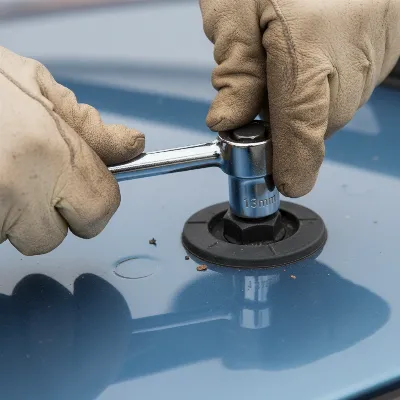 A close-up of a person carefully unscrewing a roof rack mounting bolt from a car roof, showing the exposed hole and surrounding area.
Step 3: Clean and Prepare the Mounting Area
With the roof rack removed, thoroughly clean the entire mounting area on your car’s roof. Use a degreaser, such as rubbing alcohol, and clean rags to remove all dirt, grime, old sealant residue, and any corrosion. A clean surface is paramount for a new sealant to adhere properly and create a watertight bond. Pay close attention to the bolt holes and the surrounding paintwork. Any leftover debris or oil can compromise the effectiveness of your repair, leading to future leaks.
Step 4: Apply Sealant and Install New Gaskets/Washers
Now it’s time to apply your chosen sealant. For the bolt holes, apply a generous amount of automotive-grade silicone sealant or plumbers joint compound directly into and around the holes. If using mastic washers or tape, place them directly over the bolt holes, ensuring full coverage. If your original rubber gaskets were damaged, cut new ones from gasket maker material to match the shape of the mounting feet. Place these new gaskets or the reconditioned original ones onto the roof rack feet. The goal is to create multiple layers of protection at each mounting point, providing a robust barrier against water.
Step 5: Reinstall the Roof Rack and Torque Bolts
Carefully place the roof rack back onto its mounting points, aligning the bolt holes. Insert the cleaned or new mounting bolts, ensuring they engage the threads properly. Hand-tighten all bolts first to ensure everything is seated correctly. Then, using a torque wrench, tighten each bolt to the manufacturer’s specified torque settings. This is a critical step; overtightening can strip threads or damage components, while undertightening will result in an inadequate seal. Allow the sealant ample time to cure as per the product’s instructions before exposing the vehicle to water.
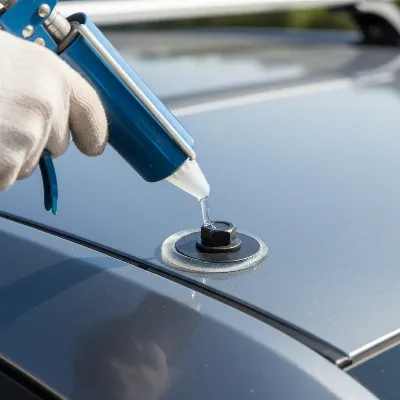 A detailed shot of a person applying a bead of silicone sealant around the base of a roof rack mounting bolt after installation on a car roof.
Step 6: Test for Leaks
Once the sealant has fully cured, perform a final leak test. Park your car outdoors during a heavy rain shower, or use a garden hose to simulate rainfall over the entire roof rack area. Inspect the interior headliner meticulously for any signs of moisture. If a leak persists, you may need to re-evaluate the steps, paying closer attention to ensuring all surfaces were clean and that the sealant created a continuous, robust barrier. Sometimes, a second application of sealant or tightening of a specific bolt might be necessary.
Choosing the Right Sealant: A Comparison
Selecting the appropriate sealant is pivotal for a successful and long-lasting repair of your leaky roof rack. Not all sealants are created equal, and understanding their properties will help you make an informed decision. The primary goal is to achieve a waterproof, durable, and flexible seal that can withstand environmental stressors.
| Type of Sealant | Advantages | Disadvantages | Best Use Case |
|---|---|---|---|
| Silicone Sealants | Excellent flexibility, UV resistant, strong adhesion to many surfaces, widely available. | Can be difficult to remove, may not adhere well to oily surfaces, some types can be corrosive to certain metals. | General-purpose sealing of bolt threads, perimeter sealing around mounting feet. |
| Mastic Sealants/Tape | Forms a thick, non-drying, pliable barrier; excellent gap-filler; good vibration dampening. | Can be messy to work with, may not offer strong structural adhesion, can attract dirt. | As washers under bolt heads, sealing larger gaps, creating a compressible, resilient seal. |
| Gasket Makers | Creates custom-shaped gaskets, high temperature and chemical resistance, good for irregular surfaces. | Requires precision in application, curing time can be longer, typically applied between two surfaces. | Forming new gaskets for mounting feet, sealing flange connections where a custom fit is needed. |
When making your selection, prioritize sealants specifically labeled as “automotive grade” or “neutral cure silicone,” as these are designed to withstand the harsh conditions on a vehicle and are less likely to cause corrosion. Avoid cheap household silicones that may not offer the necessary durability or weather resistance for outdoor automotive applications.
Preventative Measures to Avoid Future Roof Rack Leaks
Once you’ve successfully sealed your roof rack, taking proactive steps can help prevent future leaks and extend the life of your installation. Prevention is always easier than repair, and a few simple habits can make a significant difference in maintaining your vehicle’s integrity.
Regular inspection is key. Periodically check all roof rack mounting bolts for tightness, especially after long trips or exposure to rough roads. Over time, vibrations can cause bolts to loosen, compromising the seal. A quick check with a wrench every few months can identify potential issues before they become full-blown leaks. Also, visually inspect the sealant around the mounting points and the condition of any exposed gaskets or washers. Look for signs of cracking, peeling, or degradation, which could indicate a weakening seal.
When cleaning your vehicle, pay attention to the roof rack area. Gently clean around the mounting feet to prevent the buildup of dirt and debris, which can trap moisture and accelerate the degradation of seals. Avoid using high-pressure washers directly on the mounting points, as the force of the water can potentially compromise existing seals or force water into small gaps. Finally, if you frequently remove and reinstall your roof rack, always apply a fresh layer of appropriate sealant to the bolts and inspect gaskets each time to ensure a robust, watertight connection.
When to Consider Professional Assistance
While many roof rack leaks can be effectively addressed through DIY methods, there are specific situations where seeking professional help is the wiser course of action. Recognizing these limits can save you time, money, and prevent further damage to your vehicle.
If, after multiple attempts, you are unable to locate the source of the leak or if your DIY repairs fail to stop the water ingress, it might be time to consult an expert. Persistent leaks, especially those that appear to come from areas beyond the immediate roof rack mounting points, could indicate more complex issues such as compromised body seams, rusted sections of the roof, or problems with sunroof drains. These issues often require specialized tools, diagnostic techniques, and expertise that a typical DIY enthusiast may not possess.
Furthermore, if your vehicle is still under warranty, attempting extensive DIY repairs might void certain clauses. In such cases, it’s always best to have a dealership or certified service center diagnose and repair the issue. Professionals have access to specific repair procedures, specialized sealants, and often the experience to tackle difficult leaks efficiently. They can also provide a warranty on their work, giving you peace of mind that the problem has been definitively resolved.
“A well-maintained roof rack should never be a source of interior leaks. Investing time in proper installation and regular checks will not only protect your car but also extend the lifespan of your rack, ensuring it serves its purpose reliably for years to come.” – Johnathan Hayes, Automotive Sealing Specialist
Conclusion
A leaky roof rack is a common yet entirely fixable issue that can significantly impact your vehicle’s interior if left unaddressed. By understanding the typical causes—from loose bolts and degraded sealants to compromised gaskets—you can systematically approach the repair. Equipping yourself with the right tools and materials, such as automotive-grade sealants and replacement gaskets, empowers you to tackle these problems head-on. Following a detailed, step-by-step DIY process, including careful cleaning, sealant application, and proper reinstallation, is crucial for achieving a watertight seal.
Remember that diligent preventative measures, like routine inspections and mindful cleaning, are equally important in safeguarding your vehicle against future leaks. While most issues are within the realm of a confident DIYer, don’t hesitate to seek professional assistance if the leak proves stubborn or hints at a more complex underlying problem. Ultimately, a dry car interior means a more comfortable ride and better protection for your vehicle’s value. What steps will you take today to ensure your roof rack is sealed against the elements?
Frequently Asked Questions
What type of sealant is best for roof rack leaks?
For roof rack leaks, an automotive-grade, neutral cure silicone sealant is highly recommended. It offers excellent flexibility, UV resistance, and strong adhesion to metal and plastic surfaces, crucial for sealing against water intrusion. Mastic sealants or tape are also effective for creating pliable, durable barriers.
How do I identify where my roof rack is leaking?
To identify a roof rack leak, thoroughly inspect your car’s headliner for water stains. Then, with a garden hose, systematically apply water to each roof rack mounting point one at a time, having someone inside the car observe for drips. This targeted approach helps pinpoint the exact leak source.
Can a loose roof rack cause leaks?
Yes, a loose roof rack is a common cause of leaks. When mounting bolts are not adequately tightened, they can create small gaps between the roof rack feet and the vehicle’s roof. These gaps allow water to seep through, especially during heavy rain or car washes, leading to interior moisture.
Do I need to remove my roof rack to fix a leak?
In most cases, yes, it is necessary to remove the roof rack to effectively fix a leak. This allows direct access to the mounting bolts and the surrounding area, enabling thorough cleaning, application of new sealant, and replacement of any damaged gaskets or washers for a secure and lasting repair.
How often should I check my roof rack for leaks?
It is advisable to visually inspect your roof rack mounting points and check the tightness of the bolts every few months, especially after long road trips or if you frequently carry heavy loads. This proactive approach helps identify potential issues early, preventing minor problems from escalating into significant leaks.
What if my car still leaks after I’ve sealed the roof rack?
If your car still leaks after you’ve sealed the roof rack, it might indicate a different source for the water ingress. Other possibilities include blocked sunroof drain hoses, compromised body seams, or issues with window seals. In such cases, professional diagnosis is recommended to identify and correctly resolve the underlying problem.
