As the first snow falls and the mountains beckon, the excitement of winter sports quickly turns to the practical challenge of transporting your gear. Cramming skis and snowboards into your vehicle not only limits passenger space but can also pose a significant safety risk from sharp edges and unstable equipment. This is where a robust crossbar roof rack system, paired with the right carriers, becomes an indispensable tool for every snow enthusiast. It frees up your car’s interior, secures your valuable equipment, and prepares you for an effortless journey to the slopes.
Why Crossbar Roof Racks Are Essential for Winter Sports
|
Our Picks for the Best Roof Rack in 2026
As an Amazon Associate I earn from qualifying purchases.
|
||
| Num | Product | Action |
|---|---|---|
| 1 | MaxxHaul Steel Roof Rack Cargo Basket, 46" x 36" x 4.5" Roof Top Carrier, Universal Fit for Cars, SUVs, Vans, and RVs, 150 lb Capacity, Weather-Resistant Easy-Install Cargo Storage (70115) |

|
| 2 | GarveeLife 51 in x 36 in Universal Roof Rack Basket, 200 LBS Capacity Rooftop Cargo Carrier Basket, Heavy Duty Luggage Holder Rack for SUVs, Trucks, Vehicles |
|
| 3 | MeeFar Roof Rack Carrier Basket Universal Rooftop 51" X 36" X 5" + Waterproof Bag 15 Cubic Feet (44" 34" 17"), and Cargo Net with Attachment Hooks, Ratchet Straps |
|
| 4 | MAXXHAUL 50506 64" x 39" x 6" Heavy-Duty Universal Steel Roof Rack , Black |
|
| 5 | GarveeLife 46" x 36" Universal Roof Rack Cargo Carrier Basket, 200 Lbs Capacity Rooftop Cargo Rack, Car Top Luggage Holder Basket Heavy Duty for SUVs, Trucks, Vehicles |
|
| 6 | 64 x 39 x 6 Inch Roof Rack Basket, Heavy Duty 300LB Car Roof Rack Universal Cargo Carrier Rooftop Cargo Basket Steel Luggage Holder for SUV, Truck & Pickup |
|
| 7 | GarveeLife 51 in x 36 in Universal Roof Rack Carrier Basket, 200 LBS Capacity Rooftop Cargo Rack, Car Top Luggage Holder Basket Heavy Duty for SUVs, Trucks, Vehicles |
|
| 8 | munirater Universal 43.3 inch Black Roof Rack Cross Bar Top Luggage Aluminum Carrier Adjustable Window Frame 2Pcs |
|
| 9 | KitsPro 260lb Roof Rack Cross Bars for 2011-2021 Jeep Grand Cherokee (ONLY FIT Factory Grooved Side Rails), Matte Black Heavy Duty Aluminum Cargo Crossbar |
|
| 10 | Auto Dynasty Roof Rack Cross Bars Compatible with 2014-2018 Acura MDX, 165lbs Rooftop Cargo Bars Aluminum Anti-Corrosion Bolt-On Roof Rails for Luggage Bike Kayak Racks |
|
Choosing a crossbar roof rack system for your skis and snowboards offers a multitude of benefits, transforming your winter travel experience. Primarily, it significantly increases your vehicle’s cargo capacity, allowing you to comfortably transport all your gear without sacrificing interior space for passengers or luggage. This external storage solution keeps your vehicle’s interior clean and dry, preventing snow, ice, and mud from tracking inside.
Beyond convenience, safety is a paramount concern. Transporting skis and snowboards inside a vehicle can be hazardous, as sharp edges and tips can become dangerous projectiles in the event of a sudden stop or collision. By securely fastening your equipment to a dedicated roof rack, you mitigate these risks, ensuring a safer journey for everyone in the vehicle. Crossbar roof racks provide a stable and reliable platform, giving you peace of mind that your gear is protected and properly secured, no matter how long the drive to the mountain.
Understanding Crossbar Roof Rack Systems for Skiing and Snowboarding
A crossbar roof rack system serves as the foundational structure for transporting various gear, including skis and snowboards. It typically consists of two bars that run across the width of your vehicle’s roof, attaching to existing roof rails, fixed points, flush rails, or door frames via a vehicle-specific fit kit. These crossbars provide the mounting points for specialized ski and snowboard carriers.
The versatility of crossbar systems is a major advantage, as most ski and snowboard carriers are designed with universal mounting hardware. This ensures compatibility with a wide array of crossbar styles, including round, square, aerodynamic (aero), and factory-installed bars. Aerodynamic crossbars, such as the Thule WingBar Evo, are engineered to minimize wind noise and improve fuel efficiency, making for a quieter and more economical trip to the slopes. Selecting the correct crossbar system for your vehicle is the critical first step before choosing any ski or snowboard carrier.
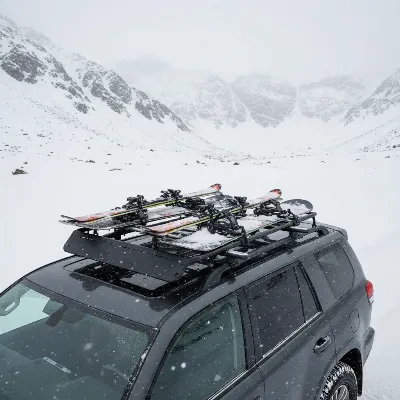 An SUV with a crossbar roof rack system and ski/snowboard carriers mounted, carrying multiple pairs of skis and snowboards.
Types of Ski and Snowboard Carriers Mounting on Crossbars
Once you have a sturdy crossbar system in place, you can choose from several types of carriers designed specifically for skis and snowboards. Each type offers distinct advantages depending on your needs for protection, capacity, and ease of access.
Clamp-Style Carriers are the most popular and straightforward option for transporting skis and snowboards. These carriers feature rubber-padded arms that clamp down securely on your equipment, holding it firmly against the crossbars. They are known for their ease of loading and unloading, often featuring large, glove-friendly buttons or levers. Many models, like the Yakima FatCat Evo and Thule SnowPack, are aerodynamic and include integrated locks to secure both your gear and the carrier to the crossbars. Some even offer extendable arms or risers to provide extra clearance for bulky bindings, preventing them from touching your vehicle’s roof. Their open design means your gear is exposed to the elements, but they are generally less bulky and more cost-effective than enclosed options.
Roof Boxes, while not solely “crossbar roof racks” themselves, are enclosed cargo carriers that mount directly onto your vehicle’s crossbars. They offer superior protection for your skis and snowboards from weather, road grime, and theft. Many roof boxes are spacious enough to accommodate multiple pairs of skis, snowboards, boots, helmets, and other winter gear, keeping everything contained and secure. Brands like Thule (e.g., Motion XT Alpine) and Yakima (e.g., SkyBox NX Skinny) offer models designed to fit skis and snowboards. While they provide excellent protection and storage, roof boxes are typically more expensive, heavier, and can impact your vehicle’s aerodynamics and fuel economy more noticeably than clamp-style carriers.
Comparison Table: Popular Ski and Snowboard Carriers for Crossbars
| Carrier Type | Advantages | Disadvantages | Typical Capacity (Skis/Snowboards) | Key Features |
|---|---|---|---|---|
| Clamp-Style Carriers | Easy loading/unloading, lower profile, versatile | Gear exposed to elements, limited other accessory space | 4-6 skis / 2-4 snowboards | Locking mechanisms, often T-slot compatible, some with extendable or riser options, aerodynamic |
| Roof Boxes (Mounted on Crossbars) | Superior weather protection, high security, additional gear space | Higher cost, potential wind noise, can impact fuel economy, bulky for storage when not in use | Varies by size (e.g., 4-6 skis / 2-4 snowboards + boots/helmets) | Hard shell, lockable, aerodynamic designs, dual-side opening |
How to Choose the Right Crossbar System and Carrier for Your Winter Adventures
Selecting the ideal crossbar system and ski/snowboard carrier involves careful consideration of several factors to ensure it meets your specific needs and vehicle requirements.
First, vehicle compatibility is crucial. Determine if your car has existing roof rails, fixed points, or a naked roof, as this dictates the type of crossbar system you’ll need. Most modern ski carriers feature universal mounting hardware that fits a variety of crossbar shapes (round, square, aero), but always verify compatibility with your specific vehicle and crossbars.
Next, assess your capacity needs. Consider how many pairs of skis or snowboards you typically carry, as well as their length and width. Many carriers come in sizes designed for 4-6 skis or 2-4 snowboards. If you have “fat skis” or snowboards with bulky bindings, look for carriers with wider loading areas or features like risers that provide extra clearance to prevent damage to your roof.
Security features are paramount for protecting your valuable gear. Opt for carriers with integrated locking systems that secure both your equipment to the rack and the rack itself to your crossbars. Brands like Thule, Yakima, and Küat are well-regarded for their robust locking mechanisms.
Consider the ease of use and installation. Look for carriers that offer tool-free installation and glove-friendly clasps, which are especially helpful in cold weather. An intuitive design will make loading and unloading your gear quick and hassle-free.
Aerodynamics and noise can significantly impact your driving experience. Low-profile and aerodynamic carrier designs help reduce wind noise and minimize their effect on fuel economy, particularly on longer trips. Some crossbar systems also feature noise-damping strips.
Finally, evaluate durability and materials. Choose carriers made from robust, corrosion-resistant materials like aluminum, often with powder coatings, and durable rubber padding to protect your equipment. These materials ensure longevity and reliable performance in harsh winter conditions.
Leading Brands for Crossbar Roof Racks and Ski/Snowboard Carriers
When it comes to dependable crossbar roof racks and ski/snowboard carriers, a few brands consistently stand out for their quality, innovation, and wide range of products.
Thule, a Swedish brand, is a global leader known for its premium quality and extensive product lineup. Their WingBar Evo series offers aerodynamic crossbars designed for a quiet ride and fuel efficiency. For ski and snowboard transport, the Thule SnowPack series is highly rated, featuring sleek designs, strong clamping force, integrated locks, and extendable options for easier loading.
Yakima, an American company, specializes in outdoor gear transport solutions. Their FatCat Evo is a top-tier ski and snowboard carrier, praised for its aerodynamic profile, versatile mounting, and integrated SKS (Same Key System) locks for enhanced security. The Yakima FreshTrack provides a more budget-friendly option while still offering reliable performance.
Rhino-Rack, an Australian brand, is known for its rugged and durable solutions, especially popular among off-road enthusiasts. Their Multi-Purpose Carrier offers a robust and versatile option for skis and snowboards, often at a competitive price point. Rhino-Rack carriers often include universal mounts and can be fitted with risers to accommodate larger bindings.
Küat, while newer to the snow sports rack market compared to Thule and Yakima, has quickly gained recognition for its high-quality construction and innovative designs. Their Küat Switch and Kuat Grip carriers offer excellent build quality, security, and a sleek aesthetic, often with features like fold-down capabilities for the Switch when not in use.
> “Investing in a high-quality crossbar roof rack system and ski carrier is not just about transporting gear; it’s about extending your adventure from your driveway to the mountaintop with confidence and ease.” – Senna Leith, Professional Snowboarder for U.S. Snowboard Team
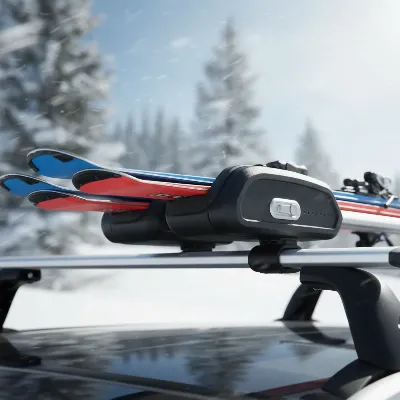 A close-up view of a ski and snowboard carrier securely mounted on an aerodynamic crossbar on a car roof, holding skis.
General Installation Tips for Crossbar-Mounted Ski/Snowboard Racks
Installing a crossbar-mounted ski or snowboard rack is a straightforward process, but careful attention to detail is key for safety and security. Always begin by referring to the specific manufacturer’s instructions for both your crossbar system and your chosen ski/snowboard carrier, as each product may have unique requirements.
First, ensure your crossbar system is correctly installed on your vehicle, with all components securely fastened and positioned according to your car’s specifications. Once the crossbars are in place, attach the ski or snowboard carrier using its designated mounting hardware. This typically involves clamps or T-slot connections that secure the carrier firmly to the crossbars. Double-check all bolts, clamps, and locking mechanisms to ensure they are tightened to the manufacturer’s recommended torque. After the initial installation, it’s wise to perform a brief test drive and re-check all fasteners. Regular inspections, especially before long trips, will help ensure continued safety and stability of your entire roof rack system.
Important Safety Considerations When Using Your Roof Rack
While crossbar roof racks offer immense convenience, adhering to safety guidelines is paramount. Always be mindful of your vehicle’s maximum roof load capacity and the weight limit of your roof rack system and carrier. Never exceed these limits, as overloading can compromise handling, damage your vehicle, or lead to dangerous failures. Distribute the weight of your skis and snowboards evenly across the carrier to maintain vehicle balance and stability.
Regularly check all components of your roof rack system—crossbars, carriers, and their mounting hardware—for tightness and wear, particularly before and after each trip. Vibrations and road conditions can loosen fasteners over time. Be aware that the added height and weight on your roof can affect your vehicle’s handling, especially in crosswinds, when cornering, or under heavy braking. Drive cautiously, reduce speed, and allow for extra stopping distance. Additionally, remember to account for the increased height when entering garages, low overhangs, or drive-thrus to avoid costly damage. Taking these precautions will help ensure a safe and enjoyable journey for you and your gear.
Conclusion
For winter sports enthusiasts, a reliable crossbar roof rack system with a dedicated ski and snowboard carrier is an essential investment that enhances convenience, maximizes space, and significantly improves safety on the road. By providing a secure and organized way to transport your gear, it ensures your vehicle’s interior remains clean and clutter-free, ready for your next adventure. Choosing the right system involves considering factors such as vehicle compatibility, capacity needs, security features, and ease of use, with top brands like Thule, Yakima, Rhino-Rack, and Küat offering excellent solutions.
Ultimately, a well-chosen crossbar roof rack system allows you to focus on the thrill of the slopes, rather than the hassle of transport. It transforms the journey into part of the adventure, getting your precious equipment to the snow safely and efficiently. What kind of winter adventures will your new crossbar roof rack unlock for you this season?
Frequently Asked Questions
What kind of crossbars do I need for a ski rack?
Most ski and snowboard carriers are designed with universal mounting hardware, making them compatible with various crossbar styles including round, square, aerodynamic, and factory-installed bars. The critical factor is ensuring you have a complete, securely installed crossbar system on your vehicle before attaching a ski carrier.
Can I carry both skis and snowboards on the same rack?
Yes, most clamp-style ski and snowboard carriers are designed to accommodate a mix of skis and snowboards simultaneously. The capacity listed for carriers (e.g., “6 skis or 4 snowboards”) indicates their versatility. Ensure your gear fits within the carrier’s loading width without overcrowding.
How do I prevent my bindings from scratching my car roof?
To prevent bindings from touching or scratching your vehicle’s roof, look for ski and snowboard carriers that offer features like integrated risers or extendable arms. These designs elevate the carrier higher off the crossbars, providing crucial clearance for bulky bindings, particularly for wider skis or snowboards.
Do roof racks affect fuel economy or cause noise?
Yes, adding a roof rack system and carriers can increase aerodynamic drag, potentially leading to a slight decrease in fuel economy and increased wind noise, especially at higher speeds. Opting for aerodynamic crossbars (like Thule WingBar Evo) and low-profile carriers can help minimize these effects.
How do I ensure my gear is secure?
To ensure your gear is secure, choose carriers with robust integrated locking mechanisms that secure both your skis/snowboards to the carrier and the carrier to your crossbars. Always double-check that all clamps, bolts, and locks are fully engaged and tightened before driving, and periodically re-check them on long trips.
