Universal roof racks are essential for bare roof cars, providing crucial extra cargo space for vehicles without factory-installed rails. These systems transform a car’s carrying capacity, making it possible to transport items like bicycles, kayaks, and camping gear that would otherwise not fit inside. The market offers diverse, high-quality solutions, including clamp-on, magnetic, and soft roof racks, each suited for different needs and load types.
Why a Roof Rack is Essential for Your Bare Roof Vehicle
A roof rack system fundamentally extends your vehicle’s utility, providing crucial extra space that a bare roof car typically lacks. This external storage is invaluable for increasing cargo capacity, freeing up interior room for passengers and smaller items, and making long journeys more comfortable. Beyond just luggage, a well-chosen roof rack can accommodate various types of gear, from bicycles and kayaks to skis and bulky camping equipment, making it a versatile accessory for any outdoor enthusiast. It effectively opens up a world of adventure possibilities, allowing you to transport items that are awkwardly shaped or too large to fit inside your car, turning a standard sedan or hatchback into a more capable adventure vehicle.
Understanding Universal Roof Racks for Bare Roofs
Universal roof racks designed for bare roof vehicles are engineered to attach securely to cars that do not have existing roof rails, gutters, or fixed mounting points. Unlike factory racks, which are integrated into the vehicle’s design, these aftermarket systems provide an adaptable solution. The term “universal” often refers to their ability to fit a broad range of makes and models, typically through specialized fitting kits that match the unique contours of a vehicle’s door frame or roofline. It’s crucial to understand that “universal” does not necessarily mean “one-size-fits-all”; rather, it implies a flexible design that can be customized with specific components to ensure a safe and secure fit for your particular car.
Key Types of Universal Bare Roof Racks
When selecting a universal roof rack for a bare roof car, you’ll primarily encounter a few distinct types, each with its own advantages and suitable applications.
-
Clamp-On Systems: These are the most common and widely recognized universal roof racks for bare roofs. They consist of crossbars, towers (or feet), and vehicle-specific fitting kits that include clamps. These clamps are designed to grip the door frame or the area just above the door, often utilizing the rubber rain gutters for a secure attachment. They offer robust carrying capacity and a semi-permanent solution, meaning they can be installed for extended periods but are also removable when not needed. The precise fit of the clamps is paramount for both security and preventing damage to your vehicle’s paintwork.
-
Magnetic Roof Racks: A less common but highly convenient option for vehicles with steel roofs, magnetic roof racks utilize powerful neodymium magnets to attach directly to the metal surface of the roof. These systems are incredibly quick to install and remove, often taking mere seconds. While they boast impressive static load capacities, their dynamic load (when driving) is lower and typically requires a safety strap run through the doors for total peace of mind. They are not suitable for cars with aluminum or panoramic glass roofs and require a layer of paint protection film where the magnets sit to prevent damage.
-
Soft Roof Racks/Pads: These are often the most budget-friendly and portable universal options, ideal for occasional and lighter loads such as surfboards, kayaks, or extra soft luggage. Soft racks typically consist of foam pads wrapped in durable fabric sleeves that sit directly on the car’s roof, secured by straps that pass through the vehicle’s interior. They are designed for quick setup and removal, protecting your roof from dents and scratches. However, their load capacity is generally lower than hard systems, and they offer less rigidity for heavy or complex loads.
|
Our Picks for the Best Roof Rack in 2026
As an Amazon Associate I earn from qualifying purchases.
|
||
| Num | Product | Action |
|---|---|---|
| 1 | GarveeLife 51 in x 36 in Universal Roof Rack Basket, 200 LBS Capacity Rooftop Cargo Carrier Basket, Heavy Duty Luggage Holder Rack for SUVs, Trucks, Vehicles |

|
| 2 | MaxxHaul Steel Roof Rack Cargo Basket, 46" x 36" x 4.5" Roof Top Carrier, Universal Fit for Cars, SUVs, Vans, and RVs, 150 lb Capacity, Weather-Resistant Easy-Install Cargo Storage (70115) |
|
| 3 | Auto Dynasty Roof Rack Cross Bars Compatible with 2014-2018 Acura MDX, 165lbs Rooftop Cargo Bars Aluminum Anti-Corrosion Bolt-On Roof Rails for Luggage Bike Kayak Racks |
|
| 4 | 64 x 39 x 6 Inch Roof Rack Basket, Heavy Duty 300LB Car Roof Rack Universal Cargo Carrier Rooftop Cargo Basket Steel Luggage Holder for SUV, Truck & Pickup |
|
| 5 | GarveeLife 46" x 36" Universal Roof Rack Cargo Carrier Basket, 200 Lbs Capacity Rooftop Cargo Rack, Car Top Luggage Holder Basket Heavy Duty for SUVs, Trucks, Vehicles |
|
| 6 | munirater Universal 43.3 inch Black Roof Rack Cross Bar Top Luggage Aluminum Carrier Adjustable Window Frame 2Pcs |
|
| 7 | MeeFar Roof Rack Carrier Basket Universal Rooftop 51" X 36" X 5" + Waterproof Bag 15 Cubic Feet (44" 34" 17"), and Cargo Net with Attachment Hooks, Ratchet Straps |
|
| 8 | MAXXHAUL 50506 64" x 39" x 6" Heavy-Duty Universal Steel Roof Rack , Black |
|
| 9 | GarveeLife 51 in x 36 in Universal Roof Rack Carrier Basket, 200 LBS Capacity Rooftop Cargo Rack, Car Top Luggage Holder Basket Heavy Duty for SUVs, Trucks, Vehicles |
|
| 10 | KitsPro 260lb Roof Rack Cross Bars for 2011-2021 Jeep Grand Cherokee (ONLY FIT Factory Grooved Side Rails), Matte Black Heavy Duty Aluminum Cargo Crossbar |
|
Top Considerations When Choosing a Universal Bare Roof Rack
Selecting the ideal universal roof rack for your bare roof car involves careful consideration of several factors to ensure safety, functionality, and compatibility. Ignoring these aspects can lead to improper fit, potential damage to your vehicle, or even dangerous situations on the road.
Vehicle Compatibility
This is the most critical factor. While “universal,” these racks require specific fit kits tailored to your car’s make, model, and year. These kits ensure the clamps precisely match your vehicle’s door jambs or rain gutters, providing a secure and stable attachment point. Always consult the manufacturer’s fit guide and accurately measure your roof’s width and the distance between desired mounting points to confirm suitability. An incorrect fit can compromise both the rack’s integrity and your vehicle’s safety.
Weight Capacity
Every roof rack system and vehicle roof has a maximum weight limit. It’s imperative to know both. The total weight you carry on your roof includes the rack itself, any accessories (like bike carriers or cargo boxes), and your actual cargo. Exceeding either the rack’s or your car’s specified limit can lead to severe safety hazards, affecting vehicle handling and potentially causing structural damage. Your vehicle’s owner’s manual will provide the manufacturer’s recommended roof load limit.
Intended Use
Consider what items you plan to transport most frequently. If you’re a cyclist, a system compatible with bike mounts is essential. For kayakers or snowboarders, specialized carriers will be needed. If you primarily need extra space for luggage, a cargo box or basket might be more appropriate. Your intended use will dictate the type of crossbars, accessories, and overall robustness required from your roof rack system.
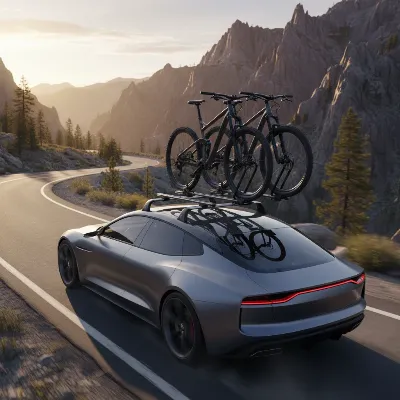 A modern sedan with a universal clamp-on roof rack, carrying two bicycles on a scenic mountain road.
Material and Durability
Roof racks are typically made from aluminum or steel. Aluminum racks are lightweight, corrosion-resistant, and aerodynamic, making them a popular choice for carrying light to medium loads. They are also fuel-efficient due to their reduced weight. Steel racks, while heavier, offer superior strength and durability, making them ideal for heavy-duty use, off-road adventures, or carrying exceptionally heavy items. Your choice should align with your anticipated load and environmental conditions.
Ease of Installation and Removal
Think about how often you’ll be installing and removing your roof rack. Some systems are designed for quick, tool-free installation and removal, making them convenient for occasional use. Others are more involved, requiring tools and more time, and are better suited for semi-permanent installation. Magnetic and soft racks excel in quick setup, while clamp-on systems, once fitted, can often be easily removed and reinstalled.
Aerodynamics and Noise
Adding a roof rack will inevitably increase wind resistance and can generate wind noise, especially at highway speeds. More aerodynamic crossbar designs (e.g., aero-shaped bars) can minimize this effect and help maintain better fuel efficiency compared to traditional square bars. Some racks also feature rubber strips or wind fairings to further reduce noise. Understanding this impact can help you choose a design that balances carrying capacity with driving comfort.
Leading Universal Roof Rack Brands for Bare Roof Cars
The market offers several reputable brands known for producing high-quality universal roof rack solutions compatible with bare roof vehicles. These brands often provide comprehensive fitment guides and diverse accessory ecosystems.
-
Thule and Yakima: These industry giants are consistently at the forefront of roof rack technology. While many of their systems are modular and often require specific “fit kits” for bare roofs, they offer exceptional quality, durability, and a vast array of accessories (bike carriers, cargo boxes, kayak saddles). Their clamp-on systems for bare roofs are renowned for secure fitting and aerodynamic designs, though they represent a premium investment.
-
SeaSucker: A truly innovative and universal solution, SeaSucker specializes in suction-cup mounted systems. Their “Monkey Bars” for instance, can be quickly attached to almost any bare roof, offering incredible versatility. They are highly portable and an excellent choice for those who need a rack only occasionally or want to easily transfer it between vehicles. Security is maintained through powerful suction cups, but proper surface cleaning is essential for optimal grip.
-
HandiWorld HandiRack: This brand offers inflatable soft roof racks that are incredibly easy to install and store. The HandiRack is a fantastic portable option for bare roofs, providing a cushioned platform for carrying lighter loads like surfboards, kayaks, or luggage. Its universal fit and ease of use make it perfect for renters or those needing a temporary solution without any permanent fixtures.
-
OXBZKMY Magneticas: For bare roof cars with steel roofs, OXBZKMY offers magnetic crossbars that provide an incredibly fast, tool-free installation. These systems boast high static load capacities, making them practical for quick trips with skis or other gear. They emphasize ease of use and instant mounting, provided your vehicle’s roof is compatible and protected.
-
RackTrip and TeqHome: These brands, frequently appearing in recent searches, offer various crossbar and cargo solutions that cater to bare roof cars. RackTrip specifically markets “Universal Car Roof Rack For Car Without Side Rails,” indicating a focus on this segment. TeqHome crossbars are highlighted for their robust aluminum or steel cores and aerodynamic profiles, often featuring anti-theft bolts and adjustable widths, making them a solid base for modular systems.
Installation Guide: Attaching a Universal Roof Rack to Your Bare Roof
Installing a universal roof rack on a bare roof typically involves a clamp-style system. While specific steps may vary by brand and model, the general process is straightforward, ensuring a secure and safe attachment.
-
Preparation: Begin by thoroughly cleaning your car’s roof and the door jamb areas where the clamps will attach. Any dirt or debris can compromise the seal or scratch your paint. Gather all components of your roof rack kit, including crossbars, towers, and the vehicle-specific fit kit. Read the manufacturer’s instructions carefully.
-
Assemble the Components: Attach the towers (feet) to the crossbars according to the instructions. This often involves securing them with bolts or specialized fasteners. Ensure all connections are snug but do not overtighten them initially, as minor adjustments may be needed.
-
Position on the Roof: Carefully place the assembled crossbars and towers onto your car’s roof. Your instruction manual or fit guide will specify the precise measurements for positioning the front and rear bars, often dictating the distance from the windshield or other reference points. Use a tape measure to ensure accurate and symmetrical placement.
-
Attach the Clamps: Once the bars are correctly positioned, attach the specific clamps from your fit kit to the towers. These clamps are designed to hook into the door jambs or rain gutters of your car. Open your car doors to access these areas. Gently fit the clamps into place, ensuring they are seated correctly and not pinching any weather stripping.
-
Tighten Securely: Progressively tighten the bolts or levers that secure the clamps to the towers and the entire system to your car. Many systems require specific torque settings, which should be achieved using a torque wrench if provided or recommended. Tighten each side incrementally to ensure even pressure and a balanced fit. Do not overtighten, as this can damage your vehicle or the rack components.
-
Final Check: After tightening, gently but firmly shake the entire roof rack system. It should feel solid and show no signs of wobbling or looseness. Close your car doors and check that they operate freely and that the clamps are not interfering with the door seal. Drive a short distance at low speed, then re-check all fasteners for security, as vibrations can sometimes cause initial loosening.
Maximizing Safety and Performance with Your Bare Roof Rack
Ensuring the safety and optimal performance of your universal bare roof rack goes beyond just correct installation. Adhering to best practices for loading and maintenance is crucial for a worry-free experience.
Load Management
Never exceed the maximum weight capacity of your roof rack or your vehicle’s roof. Distribute the weight evenly across the crossbars to maintain vehicle stability and prevent undue stress on any single point. Heavy items should be placed towards the center of the vehicle, and all cargo must be secured using appropriate tie-downs, straps, or nets to prevent shifting or detachment during transit.
Regular Checks
Before every trip, especially longer ones, perform a quick inspection of your roof rack. Check all bolts, clamps, and connections to ensure they are still tight and secure. Look for any signs of wear or damage to the components. This routine check is vital, as road vibrations and weather changes can sometimes affect the integrity of the setup.
Driving Habits
Be mindful that a loaded roof rack will change your vehicle’s center of gravity, increasing its overall height and potentially affecting handling, especially in crosswinds or during sharp turns. Adjust your driving style by reducing speed, increasing braking distance, and exercising caution in high winds. Always remember your increased vehicle height when entering garages, carports, or drive-thrus.
Paint Protection
For clamp-on systems, the contact points between the clamps and your car’s door frame can, over time, cause minor paint wear. Consider applying clear paint protection film or small pieces of vinyl at these contact points to safeguard your vehicle’s finish. For magnetic racks, this step is mandatory to prevent scratches from debris trapped under the magnets.
“Choosing the right universal roof rack for your bare roof vehicle transforms its utility, allowing you to carry more and explore further without compromise.” – Sarah Chen, Automotive Accessories Expert.
In conclusion, a universal roof rack is a transformative accessory for any bare roof car owner, dramatically expanding your vehicle’s carrying capacity and opening doors to new adventures. From clamp-on systems offering robust support to magnetic options providing instant utility, the market in 2026 offers diverse, high-quality solutions. By carefully considering your vehicle’s compatibility, intended use, and the critical aspects of weight capacity and material, you can select a system that is both safe and effective. Remember to prioritize meticulous installation and adhere to crucial safety guidelines for loading and driving. Equipped with the right knowledge and the perfect roof rack, what new journey will you embark on next?
Frequently Asked Questions
Can I install a universal roof rack on any bare roof car?
While marketed as “universal,” most roof racks for bare roof cars require a specific fit kit tailored to your vehicle’s make, model, and year. This ensures the clamps securely fit your car’s door jambs or roofline. Truly universal options like suction cup or inflatable racks offer broader compatibility but may have different load limitations and use cases. Always check the manufacturer’s fit guide.
How do magnetic roof racks work and are they safe?
Magnetic roof racks use powerful neodymium magnets to attach directly to a steel car roof. They are incredibly quick to install and remove. They are safe for steel roofs when used correctly and within specified load limits, often including a safety strap through the doors. However, they are not suitable for aluminum or glass roofs and require paint protection to prevent scratches.
What is the typical weight capacity for a bare roof rack system?
The typical weight capacity for a bare roof rack system varies significantly by brand, design, and vehicle model, often ranging from 75 kg to 100 kg (around 165 to 220 lbs). However, you must always defer to the lower of either the rack manufacturer’s limit or your vehicle’s maximum roof load capacity, as specified in your car’s owner’s manual.
Will a roof rack damage my car’s paint?
When installed correctly and with care, a quality roof rack system should not damage your car’s paint. However, improper installation, overtightening, or failure to clean contact points can lead to scratches or indentations over time. Using paint protection film at clamp locations, especially for bare roof systems, is highly recommended to safeguard your vehicle’s finish.
How does a universal roof rack affect fuel efficiency?
A universal roof rack, particularly when loaded, will typically increase aerodynamic drag and reduce your car’s fuel efficiency. The extent of this impact depends on the rack’s design (aerodynamic crossbars are better), the size and shape of the cargo, and your driving speed. Removing the rack when not in use can help mitigate this effect.
Frequently Asked Questions
Can I install a universal roof rack on any bare roof car?
Most universal roof racks for bare roof cars require a specific fit kit tailored to your vehicle's make, model, and year to ensure secure attachment. While truly universal options like suction cup or inflatable racks exist, they may have different load limitations. Always consult the manufacturer's fit guide for compatibility.
How do magnetic roof racks work and are they safe?
Magnetic roof racks use powerful neodymium magnets to attach directly to a steel car roof, offering quick installation and removal. They are safe for steel roofs when used correctly within specified load limits and often include a safety strap. However, they are not suitable for aluminum or glass roofs and require paint protection to prevent scratches.
What is the typical weight capacity for a bare roof rack system?
The typical weight capacity for a bare roof rack system ranges from 75 kg to 100 kg (approximately 165 to 220 lbs), but this varies by brand and vehicle. Always adhere to the lower of either the rack manufacturer's limit or your vehicle's maximum roof load capacity, as specified in your car's owner's manual.
Will a roof rack damage my car's paint?
When installed correctly and with care, a quality roof rack system should not damage your car's paint. However, improper installation, overtightening, or failure to clean contact points can lead to scratches. Applying paint protection film at clamp locations is highly recommended to safeguard your vehicle's finish.
How does a universal roof rack affect fuel efficiency?
A universal roof rack, especially when loaded, will typically increase aerodynamic drag and reduce your car's fuel efficiency. The impact depends on the rack's design, cargo size, and driving speed. Removing the rack when not in use can help mitigate this effect and improve fuel economy.
Installing a Universal Roof Rack on Your Bare Roof Car
This guide outlines the general steps for securely attaching a clamp-style universal roof rack to a bare roof vehicle, ensuring safety and proper fit.
Thoroughly clean your car's roof and door jambs to prevent scratches and ensure a secure seal. Collect all parts of your roof rack kit, including crossbars, towers, and the vehicle-specific fit kit. Carefully read the manufacturer's instructions before starting.
Attach the towers (feet) to the crossbars as directed by the instructions, typically using bolts or specialized fasteners. Ensure all connections are snug but avoid overtightening initially, as minor adjustments may be necessary for proper alignment.
Carefully place the assembled crossbars and towers onto your car's roof. Refer to your instruction manual for precise measurements to position the front and rear bars, often relative to the windshield or other reference points. Use a tape measure to ensure accurate and symmetrical placement.
Once the bars are correctly positioned, attach the specific clamps from your fit kit to the towers, hooking them into the car's door jambs or rain gutters. Open your car doors to access these areas and gently fit the clamps, ensuring they are seated correctly without pinching weather stripping.
Progressively tighten the bolts or levers that secure the clamps to the towers and the entire system to your car, using a torque wrench if recommended. After tightening, gently shake the rack to confirm it's solid. Drive a short distance and re-check all fasteners for security.

I was really struggling to find a good solution for my Honda Civic since it doesn’t have any factory rails. The clamp-on system mentioned here was a lifesaver. It was surprisingly easy to install, and I’ve already used it to haul my kayak to the lake twice. Feels super secure even on the highway.
Got one of the universal roof racks after reading about them. It’s great for freeing up interior space on road trips, which was my main goal. My only minor complaint is that it adds a bit more wind noise than I expected, especially at higher speeds. Still, totally worth it for carrying all our camping gear.
This post helped me finally pick out a roof rack for my car. I needed something reliable for transporting my bike, and the options for bare roof cars were a bit overwhelming. The system I chose has been fantastic; it’s sturdy and gives me so much more flexibility for weekend adventures. No more trying to cram the bike into the trunk!
I tried one of the magnetic options for my sedan, hoping for an easy on-off solution. While it was simple to attach, I found myself constantly worrying about its hold, especially with heavier loads. It’s probably fine for lighter items, but I wouldn’t trust it with my mountain bike on a long drive. Might need to look into a more permanent setup.